
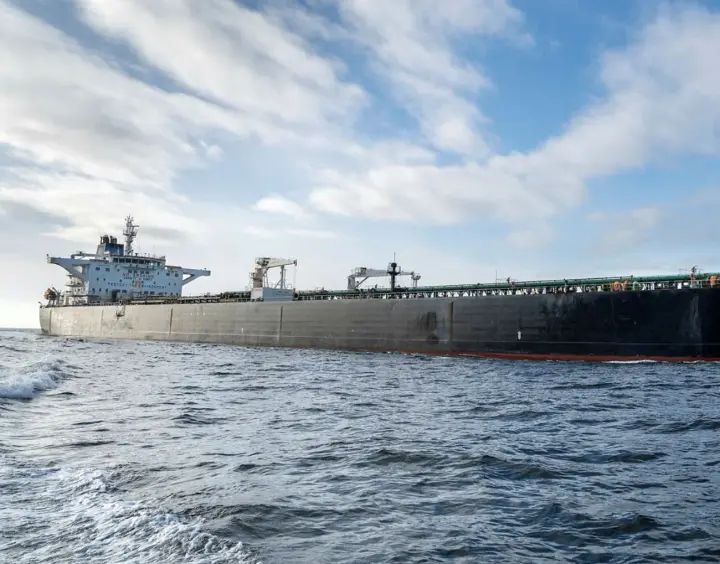
Amid escalating geopolitical tensions in the Middle East, global shipping companies have begun reconsidering their maritime routes, with a growing trend to avoid passing through the Strait of Hormuz, despite the massive insurance and reinsurance coverage provided by the United States, estimated at around $40 billion to counter the risks of war in the maritime transport sector.
Increased risks are driving a shift in global trade patterns.
Khaled Sayed, Managing Director of Apex Reinsurance Brokerage, said that this shift in global shipping traffic is due to the continued tension in the Strait region, coinciding with reciprocal actions between regional and international parties, which has led to increased fears of targeting commercial vessels and disruption of supply chains.
He explained that these developments have prompted many shipping companies to look for safer alternative routes, even if they are less efficient in terms of time and cost.
The Cape of Good Hope is a temporary alternative despite the high costs.
Syed noted that a number of international shipping companies have already resorted to using the Cape of Good Hope route as a temporary alternative route to avoid the risks of passing through the Strait of Hormuz, despite the resulting increase in travel time and operating costs, until the geopolitical situation in the Middle East stabilizes.
He added that the continuation of American insurance coverage has not succeeded in restoring full confidence to the market, especially with the lack of clarity regarding the implementation mechanisms and the extent to which they cover all global shipping companies.
US coverage and reinsurance against war risks
In a related context, the United States launched insurance and reinsurance coverage programs worth approximately $40 billion with the aim of reducing war risks in the maritime shipping sector, with a focus on protecting global trade.
It is estimated that these coverages may be primarily directed towards ships flying the American flag, which may limit the benefit to other global fleets.
International interventions to address the rising risks of marine insurance
According to a report issued by the Organisation for Economic Co-operation and Development (OECD), some countries, such as India, are considering launching similar support programs for the insurance sector related to geopolitical risks, given the rising cost of war risk insurance.
The report explained that escalating tensions in the Middle East led to a significant increase in marine insurance premiums, as a result of disruptions to trade routes related to energy and basic commodities, prompting governments and international institutions to intervene to ensure the stability of insurance markets.
Restructuring the global marine insurance market
The report noted that the U.S. International Development Finance Corporation (DFC) had launched reinsurance arrangements in cooperation with U.S. companies, with the aim of reducing the risk of trade disruptions in conflict zones.
He also stressed that the conflicts in Ukraine and the Middle East have brought back into focus the importance of war risk insurance in protecting investments and ensuring the continuation of economic activity during crises.
War losses are reshaping global insurance priorities.
The report explained that wars lead to huge losses, including the destruction of infrastructure and the disruption of supply chains, noting that the Russian-Ukrainian war caused partial paralysis of the grain sector, one of the most important sectors in global trade.
According to estimates, Ukraine has lost about $195 billion since 2022, while reconstruction needs are estimated at about $588 billion over the coming years.
Two main types of war risk insurance
The report stated that there are two main types of war-related insurance:
Political risk insurance, which protects investments from confiscation and currency conversion restrictions.
Property insurance with war risk coverage, which covers direct physical damage.
He stressed that periods of conflict usually witness an increase in demand for insurance, coupled with a decrease in capacity and a rise in prices, which reinforces the role of governmental and international interventions.
Insurance as a tool to mitigate the effects of wars
The report concluded by emphasizing that insurance does not prevent wars, but it plays an important role in reducing their economic effects, supporting the continuation of business activities, and contributing to recovery and reconstruction processes after the end of conflicts.
Robban Assafina is now on WhatsApp channel. Click Here


