
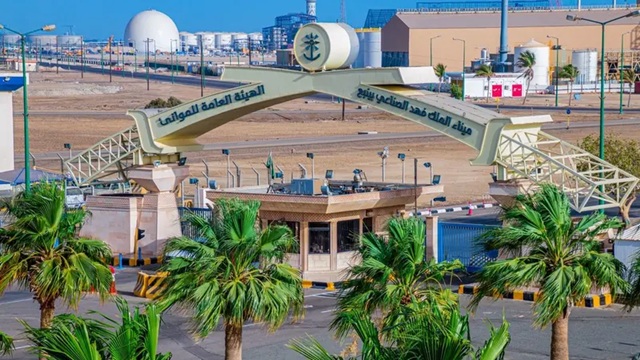
Saudi Arabia is diverting millions of barrels of crude oil to the port of Yanbu on the Red Sea coast, according to a report by Bloomberg.
The move aims to help the world’s largest oil exporter maintain supplies to global markets as the Strait of Hormuz remains closed due to the ongoing conflict with Iran and storage tanks in the region continue to fill.
Oil tanker-tracking data compiled by Bloomberg shows that five supertankers have already loaded oil this month at the port of Yanbu on the Kingdom’s west coast, with exports tripling the average recorded in February.
Saudi Arabia typically ships most of its crude from the port of Ras Tanura in the Arabian Gulf. While loading operations there have not stopped, the conflict means shipments are not leaving the region for global markets as they normally would.
The conflict has effectively closed the Strait of Hormuz to commercial shipping, disrupting supplies of oil, fuel and gas and threatening energy production across the region if the situation persists.
Saudi Arabia’s large storage capacity
According to JPMorgan Chase, Saudi Arabia’s vast storage capacity allows it to withstand a prolonged closure of the Strait of Hormuz better than any other Gulf producer. The option of diverting shipments to the port of Yanbu also provides an additional safety margin.
Energy consultancy Energy Aspects also said Saudi Arabia may have greater capacity to withstand a shock to the energy sector than some of its neighbors, noting the possibility of diverting millions of barrels per day through the East-West pipeline to the Red Sea.
Saudi Aramco, the Kingdom’s energy giant, said on Wednesday that it is sending export volumes from its main production areas in the east through pipelines to ports on the Red Sea. In theory, this pipeline has the capacity to transport most of Saudi Arabia’s daily crude exports, estimated at around 7 million barrels.
Five VLCCs load at Yanbu
Tanker-tracking data compiled by Bloomberg shows that five very large crude carriers (VLCCs) departed the port of Yanbu on Saudi Arabia’s Red Sea coast during the first four days of March. These vessels can carry a combined total of about 10 million barrels.
This brings average daily shipments so far this month to about 2.5 million barrels per day, compared with 786,000 barrels per day in February, according to the tracking data.
Several other tankers are also heading toward the Red Sea after previously sailing toward the Arabian Gulf.
Meanwhile, Brent crude futures have risen about 15 percent since Friday’s close, with prices surpassing $80 per barrel for the first time in more than a year.
European gas prices have also increased further this week after Qatar, a major exporter, temporarily reduced production.
With the Strait of Hormuz effectively closed, storage tanks at refineries and oil fields across the Arabian Gulf are filling up, while the number of ships available to load cargoes is rapidly declining.
Iraq has already shut down some production due to full storage capacity, and analysts at JPMorgan warn that other producers, including Kuwait, could face a similar situation within less than two weeks.
Robban Assafina is now on WhatsApp channel. Click Here

.jpg&w=256&q=75)


