
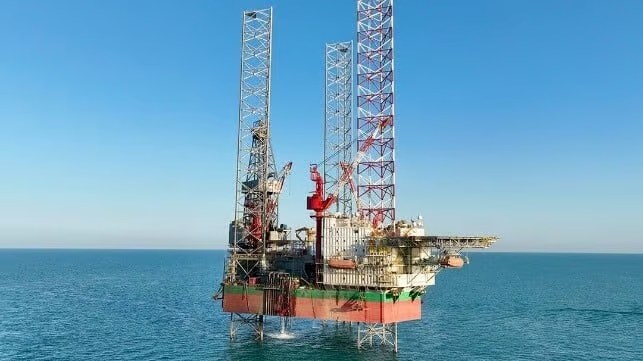
Kuwait's Ministry of Defense said a drone strike damaged an offshore drilling platform operated by the state-owned Kuwait Petroleum Company near Shuwaikh Port, injuring one worker and causing substantial damage to the facility. The ministry condemned the attack as a "criminal" act.
The platform strike - a likely but unconfirmed operation by Iranian forces - is among the first attacks on energy infrastructure in the GCC states since the ceasefire began.
The recent Iranian missile and drone volleys have focused on U.S. military bases and the nations that host them, without the damage to oil and gas facilities seen in the first round of intense hostilities in March and April.
Dozens of targets around the region were hit over the weekend. After Iran struck and damaged a container ship in the Strait of Hormuz on Saturday, Iranian and American forces traded fire on July 11-12 - the most intense exchange since the beginning of the ceasefire agreement last month, with extensive damage reported on both sides.
In addition to the Kuwaiti platform strike, Iranian attacks or attempted attacks have been reported in Oman, Qatar, Bahrain and Jordan. Open-source intelligence researchers have spotted apparent impact sites via Sentinel-2 low-resolution satellite imaging, notably at Prince Hassan Air Base in Jordan, one of the staging points for long range U.S. Navy-operated surveillance flights near Iran.
The extent of any damage at the air base remains unconfirmed, but satellite imaging shows clear visual changes in the vicinity of one large hangar and a nearby apron. U.S. strikes hit 140 Iranian targets overnight Saturday, according to U.S. Central Command. Targets included Iranian missile and drone launch sites, naval units, ammunition storage sites, communications systems and coastal surveillance locations.
Additional follow-up strikes on Sunday night included more attacks on air-defense systems, coastal radars, and small boats. For the first time ever reported, the U.S. military used "one-way attack sea drones" in combat, Central Command said.
Satellite imaging also appears to show impact damage on the site of Iran's Bushehr nuclear power plant complex, though the timing of the damage is unclear; satellite data suggests a physical event occurred sometime between July 7-12, and caused damage to a building located several hundred yards from the main reactor. Residents in the Bushehr region reported strikes and air defense activity overnight July 11-12.
In a statement carried by state media, the Atomic Energy Organization of Iran dismissed reports of an attack on the Bushehr nuclear site, claiming that "the plant remains fully operational, secure, and stable, with all systems running continuously and without any disruption."
Bushehr is undergoing a planned expansion with the addition of two more Russian-built reactors. The project has been delayed by the conflict, which prompted state atomic agency Rosatom to withdraw its advisors and workers in March, but Rosatom director Rosatom Director General Alexei Likhachev has said that both Russia and Iran remain committed to completing the reactors. An attack on an Iranian nuclear site - if confirmed - would mark a major escalation.
Robban Assafina is now on WhatsApp channel. Click Here
BREAKING: A massive plume of black smoke is rising from Qeshm Island near the Strait of Hormuz following heavy US airstrikes in the last hour.
— The Hormuz Letter (@HormuzLetter) July 12, 2026
A US official confirms the US military conducted heavy strikes on Iranian missile and air defense systems as well as IRGC speed boats at… pic.twitter.com/7fZSGBMe0l


