
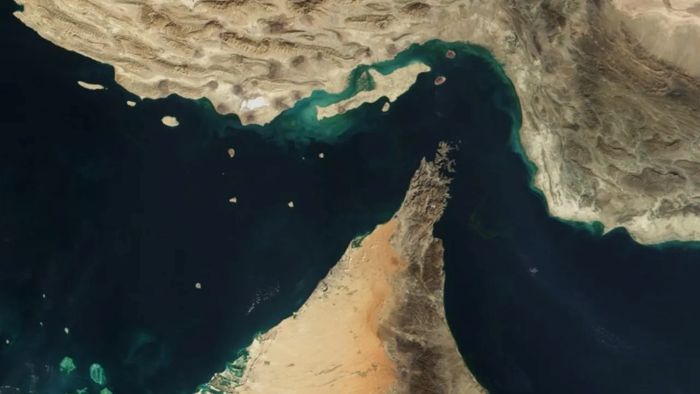
Five weeks since the US and Israel launched their attacks on Iran, control of the Strait of Hormuz remains firmly in Tehran’s grip, despite the economic shockwaves felt by governments around the world. According to Iran’s Fars News Agency, 15 ships were allowed to pass through the Strait in the past 24 hours (as of 2100 hrs GMT on 5 April).
Maritime analytics firm Windward reported a total of 20 transits of the Strait - 14 outbound and 6 inbound - in a 24 hour period on Sunday. This is the highest number of transits since war started on 28 February but only a seventh of the historic average of 138 per day.Iran claims the Strait remains open except to vessels belonging to nations attacking Iran and nations supporting attacks on Iran. Iraqi vessels have been granted specific permission to transit the Strait, according to statements on Iran's state media. A statement from the Islamic Revolutionary Guard Corps Navy said the Strait will never return to its former state, especially for the US and Israel.
The exact form of the Strait's new state remains unclear but legislation is being prepared in Iran to impose fees on vessels transiting the Strait of Hormuz, a situation opposed by a recent meeting of governments. Oman is holding talks with Iran on passage of the key waterway and transits in recent days have seen two passages opening up - one controlled by Iran close to Larak Island and second much closer to Oman, which has been used by a number of Omani owned/managed vessels.
On 2 April, UK Foreign Secretary Yvette Cooper chaired a virtual meeting to discuss the Strait of Hormuz attended by over 40 countries plus the International Maritime Organization (IMO).
A summary of the meeting said a number of areas of possible collective, co-ordinated action were discussed, including increasing diplomatic pressure on Iran, exploring economic and political measures such as sanctions, and working with the IMO to secure the release of ships and seafarers trapped by the strait’s closure.
Diplomatic pressure would be used to send a message to Iran “to permit unimpeded transit passage through the Strait of Hormuz and to comprehensively reject the imposition of tolls on vessels which seek to pass through,” the session chair’s statement said.
IMO secretary general Arsenio Dominguez supported the move towards greater alignment an co-ordination.
Speaking after the meeting, Dominguez said: “Fragmented responses are no longer sufficient to resolve this crisis. What is urgently required is diplomatic engagement, practical and neutral solutions, and co-ordinated international action.”“IMO is advancing a maritime evacuation framework built on coastal State co-operation, security guarantees and operational co-ordination, with the clear objective of releasing stranded vessels, enabling safe crew rotations and preventing an environmental disaster.”
The President’s statement came with renewed threats to attack bridges, power plants and water facilities in Iran; Iran has vowed to respond in kind to any such attacks. Trump’s ultimatum comes with an unclear — or at least shifting — deadline. Initially set to expire on 6 April, having been extended on three previous occasions, the deadline now appears to be 0000 hrs GMT on 8 April, according to Trump’s most recent social media posts.
Source: Seatrade maritime
Robban Assafina is now on WhatsApp channel. Click Here


.jpg&w=256&q=75)

