
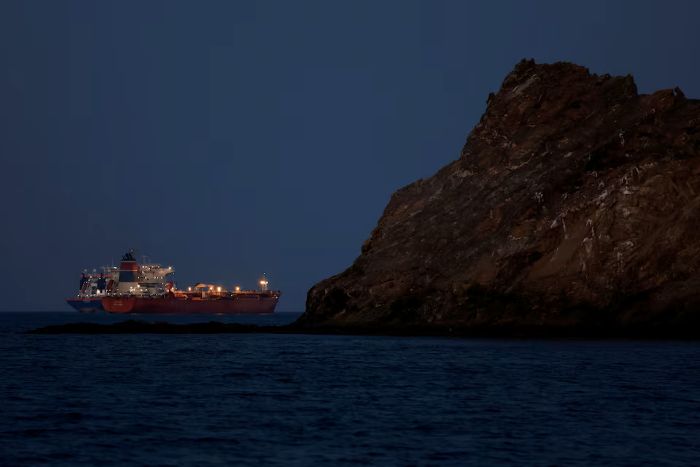
Importers across the Gulf are scrambling to secure alternative routes for vital goods from food to medicine and factory supplies after the closure of the Strait of Hormuz disrupted ports in a region heavily reliant on imports.
The disruption of navigation through this vital sea lane, caused by the US-Israeli war on Iran, has disrupted oil exports from the Gulf states, shaking global energy markets.
But the shutdown is also prompting a rapid and costly rethink of supply chains in order to maintain the flow of essential imports, as logistics companies scramble to overcome difficulties caused by changing ship destinations, transporting goods by land, and preserving perishable materials.
Ronan Poudet, head of containers at data analytics firm Kpler, said, "Supply prices will rise significantly... Trucking goods from any port to Dubai will likely be (several) times more expensive than sea freight."
Changing ship routes and resorting to land routes
Kepler data showed that 81 container ships were headed to ports within the Strait of Hormuz on February 28, just before the outbreak of war. Since then, 43 ships have been diverted to other Gulf ports, while the rest have been rerouted away from the Gulf region altogether.
Due to the arid climate in the region, the Gulf imports the majority of its food, with about 70 percent of it passing through the Strait of Hormuz and then heading to major ports such as Jebel Ali in Dubai.
While the lockdown has affected all imports, from consumer goods to industrial products, food supplies are particularly vulnerable.
For example, Christophe Belloc, from the French fruit and vegetable sector association Interfel, pointed to shipments totaling about five thousand tons of French apples that were destined for Dubai, which are now stuck.
These goods were subject to an additional maritime duty of €900,000 ($1 million) in the early days of the war. Exporters, including Blue Whale, owned by Belloc, are now trying to divert shipments to other ports.
This won't be easy, because health documentation for agricultural goods is tied to the country of origin. Bellock said the options are limited.
He said, "We are dealing with perishable goods. We can tolerate a delay of 15 days, but not much longer than that."
Shipments are diverted to ports outside the Strait of Hormuz, such as Fujairah and Khor Fakkan in the UAE and Sohar in Oman, before trucks are used to transport the containers to their original destinations.
However, these ports do not have the operational capacity of larger facilities such as Jebel Ali, Gaurav Biswas, CEO of logistics company Trucker, said, "Port operators are taking steps to cope with the pressure, opening additional entry lanes and extending working hours. But there is congestion, which has led to increased customs clearance times."
To meet the surge in demand for road transport, Trucker plans to increase the number of daily truck trips from 60 to 500.
But Biswas said that cross-border shipments are delayed due to additional inspections, with larger shipments taking longer to clear, and the company raised prices between 5 percent and 15 percent on routes to Saudi Arabia due to higher fuel costs, additional complications, and strong demand.
There is no safe port amid the crisis.
Although they are not affected by the closure of the Strait of Hormuz, regional ports outside the strait remain vulnerable.
The port of Fujairah handles containers, but it also houses a major crude oil export terminal that has been the target of repeated Iranian attacks. Iran has also targeted the ports of Duqm and Salalah in Oman.
The supply chain manager at a fast-moving consumer goods company said that companies would face further delays and higher costs if alternative routes were closed.
Faced with these risks, some Gulf retailers are avoiding ports altogether. For example, Lulu Retail, which operates a chain of stores, has airlifted at least 160 tons of meat and fresh produce this month and plans further air shipments to maintain stock levels in its UAE stores.
But major regional air cargo hubs, including Abu Dhabi and Doha, also experienced disruptions due to the attacks. A drone attack on Dubai International Airport, the third such attack since the start of the war, brought air traffic to a standstill for several hours on Monday.
However, the challenges facing supply chains in the region have not yet led to shortages. The UAE has confirmed that its strategic reserves of essential goods are sufficient to cover its needs for four to six months.
Yuvraj Narayan, CEO of DP World Group, said that companies are adapting to the situation. "DP World, which operates Jebel Ali Port and other ports in Asia, is already seeing shipping companies stockpile cargo in India and Pakistan for onward transport via smaller vessels to Fujairah and Khor Fakkan. Ports on the Red Sea, including Jeddah in Saudi Arabia and Sokhna in Egypt, are also expected to experience increased activity.
Narayan said, "We already have rail and road transport routes in place to ensure the continued arrival of all essential goods needed by the UAE."
He added, "There are a lot of redirection processes underway."
(US$1 = €0.8710)
Robban Assafina is now on WhatsApp channel. Click Here

.jpg&w=256&q=75)


