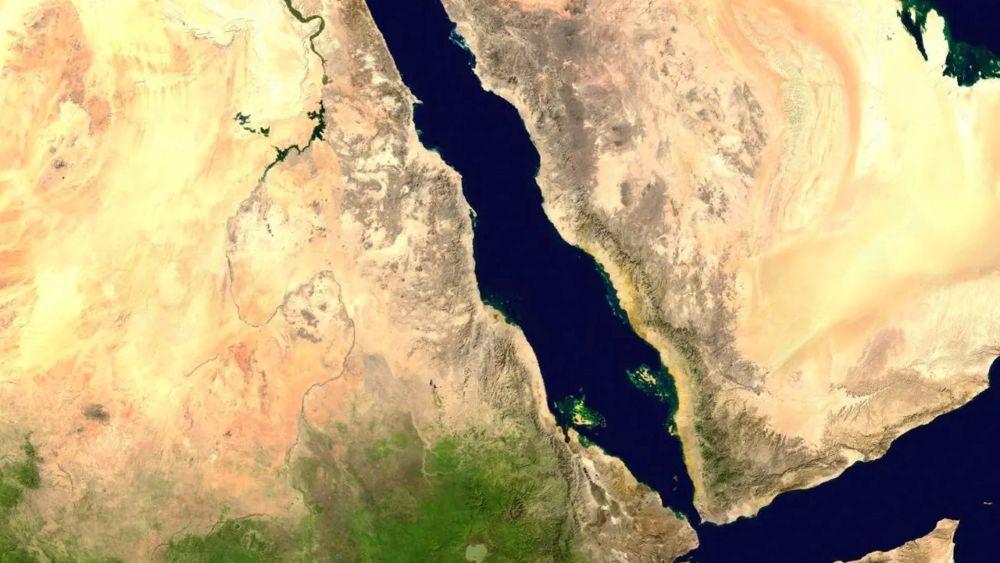
An accelerating return of container shipping to the Suez Canal, Red Sea and Bab El Mandeb, amid an escalating and widening conflict between Saudi Arabia and Yemen-based Houthis is raising industry concerns. Are crew and cargoes at risk?
For almost three years, since the latest conflict in the Middle East began, container shipping lines have diverted their vessels around the Cape of Good Hope.
Some tentative attempts were made to return to the far shorter Red Sea route earlier this year, but the US war on Iran stalled the return to Suez Canal transits.
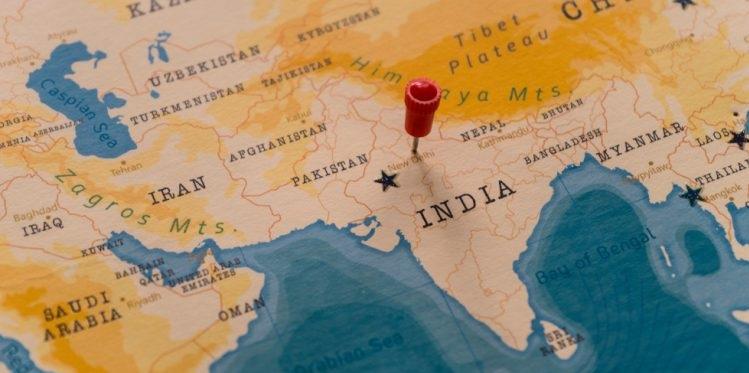
Since the summer, however, an accelerated return to the far shorter route has seen some 63% of pre-war capacity return to the route which bisects North and East Africa to the west and Saudi Arabia and Yemen to the east.Increased tensions in the region, particularly between Saudi Arabia and Yemen-based Houthis, are again causing anxiety amongst industry organisations, except it seems the shipping lines.
Global Shippers’ Forum (GSF) director James Hookham told Seatrade Maritime News: “This is a situation that works until it doesn’t”
Shippers, said Hookham, welcome the shorter transit times and hopefully lower costs, but they fear the rapid unwinding of these arrangements and further disruption “should the security situation collapse, which we are just one missile strike away from.”He went on to say: “Shippers are having to trust that shipping lines have called this right and are not putting cargoes, never mind their crews, in harm’s way.”
Carriers that were asked about the safety concerns regarding the return to the Red Sea referred to recent statements made by executives.
On 12 October Hapag-Lloyd said: “Each transit remains subject to a thorough security review and will take place with naval protection and in close coordination with the relevant authorities and security partners.”
Maersk also responded to requests for comment by citing CEO Vincent Clerc from mid-August: “All the analysis that we make and all the stakeholders on the military and intelligence side that we speak to will tell us that, as it is today, the conditions for a full return through the Red Sea are met.”
Meanwhile, GSF pointed out that the Houthi Movement had reportedly stated, in a letter to the European Commission, that merchant shipping had nothing to fear, unless ships were calling at Saudi ports and they have been true to their word, so far.
However, Hookham pointed out: “if a vessel is damaged by military action will the owner be able to claim General Average on the cargo carried, even though the decision to put the ship in danger was solely that of the vessel operator?”
“This seems like the maritime equivalent of moral hazard,” he added.
Although there has been a significant reduction in Houthi activity against shipping in the Bab El Mandeb/Red Sea region as acknowledged by Dynamar analyst Darron Wadey, he still sees the risks involved.The last vessel attack in the region was in the autumn of 2025, does that make the navigation of the Red Sea safe? Asked Wadey rhetorically, “Not entirely,” was his response.
“There is still an underlying fragility to the current situation that could quickly escalate to a return of the attacks on shipping seen over 2023-25,” he added.
That Red Sea vulnerability was highlighted by the French daily Le Monde who reported, last week, a drone had threatened the 23,112 teu CMA CGM Champs Elysees was destroyed by a navy escort.
Today, Veson’s VesselsValue AIS shows Maersk’s 9,000 teu Tangier Maersk steaming at 18kts for Jeddah, before heading south to the Bab al Mandeb and then Salalah and then India.
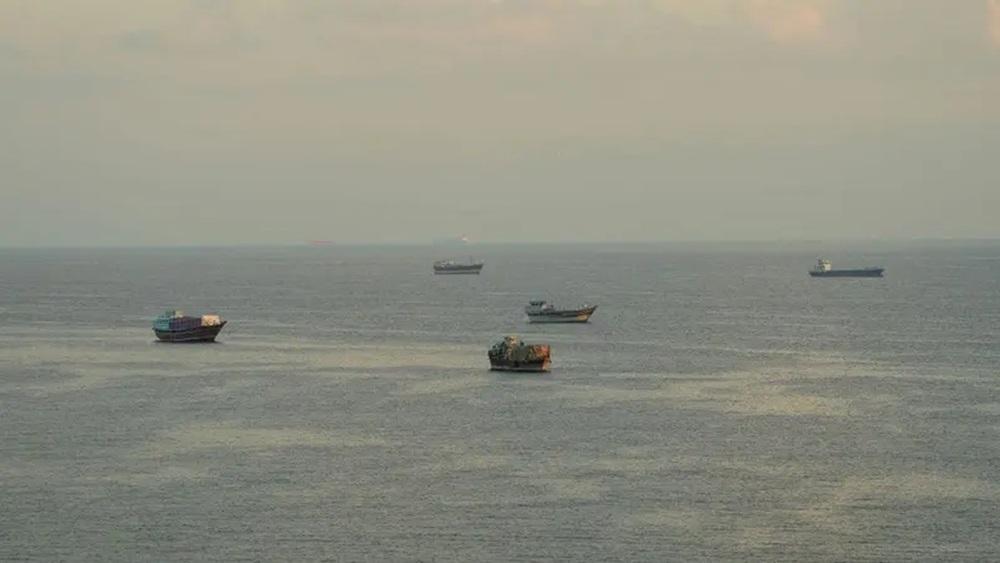
At the time of writing Veson’s VesselsValue AIS data shows more than 30 ultra-large and New Panamax container ships transiting the region, with many other smaller vessels also operating there, from Maersk, Cosco, CMA CGM, Hapag-Lloyd and other lines, with the Premier Alliance announcing two services making the return.
In total Alphaliner reports that eight of the top 10 lines will soon bee operating through the Bab El Mandeb.According to Alphaliner it has, “Surveyed the routings used by the Top 10 carriers on the Far East - Europe trade from 15 September to 15 October 2026. Over this period, containerships transiting the Red Sea were observed on 24 of the 46 direct services operated by these carriers between the Far East and Europe.”
At the beginning of this year Bimco said container ship transits through Suez and the southern Red Sea remained very low, 60% below pre-war levels. Though CMA CGM and feeder operators had continued to use the route.
By July the Gemini Cooperation carriers tested the water with the routing of its AE15 service, which Antonella Teodoro, an analyst at MDS Transmodal said at the time it was unlikely to signal a full-scale return to the shorter route.
“The industry has invested significantly in alternative routings, network resilience and supply chain flexibility, and many of these changes are likely to remain embedded in carriers’ strategies as they continue to balance efficiency with risk management,” she said.
In the last few weeks, however, there has been a rush to return vessels to the Bab El Mandeb, Red Sea and Suez Canal, with BIMCO reporting that more than 50% of capacity had returned to the route, today Alphaliner reported that had increased to 63%, with the consultant expecting a full return via the Bab El Mandeb by Q1 next year.
As a result, Wadey noted that by reaching 63% in the first nine months of the year puts the rate of a full return to the Red Sea within the next six months.
However, considering the slow start to the return and the near exponential increase witnessed in the past month or so raising confidence levels, which, if the return to the Red Sea continued to accelerate, “could see a near full return by early 2027,” said Wadey.“The stragglers would be restricted to vessels that started out via southern Africa whilst those following behind effectively overtook them by taking the shorter Suez route,” he added.
That assessment clearly depends heavily on the evolution of the conflict and how the Houthis respond to that evolution.
Riyadh has invoked its protective deal with Turkey and Pakistan following the recent Mecca defence deal, while Egypt has also said it would come to Saudi Arabia’s defence.
Those announcements follow reports from ACLED (Armed Conflict Location & Event Data) of a series of Houthi attacks that disrupted Saudi air travel and damaged energy infrastructure raising concerns over whether the country could protect critical infrastructure.
According to ACLED the Saudi authorities have already delayed a major four-day investment conference, due to take place in Riyadh from 26 October, that will now happen next year.
Even before these strikes ACLED noted in a recent report that pointed out that the Houthi’s improved position around the Bab El Mandeb with the group pivoting to “calibrated coercion rather than maximum disruption”.
In effect Houthis are targeting Saudi ships with the expectation that this would limit the risk of allies such as the US responding. Though the UK has sent fighter jets to the region in a defensive role, to protect Saudi infrastructure.
“The threat to shipping nevertheless remains persistent, as the Houthis retain both the capability and the willingness to widen maritime targeting if the confrontation escalates,” concluded ACLED.
Robban Assafina is now on WhatsApp channel. Click Here