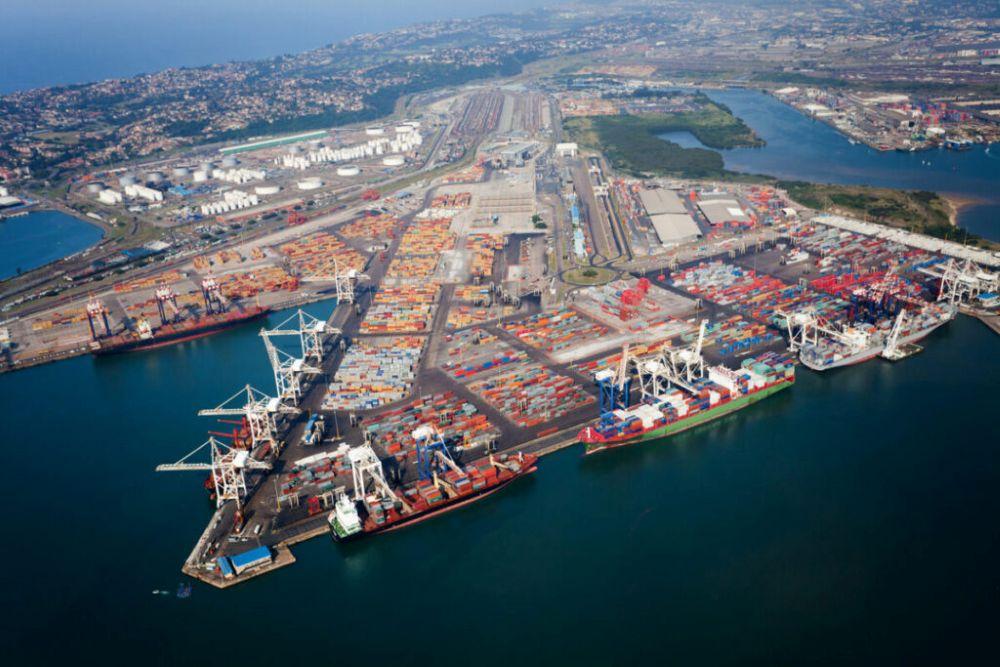
Cabinet has announced that Transnet National Ports Authority (TNPA), the landlord port authority for South Africa’s eight ports, is to be corporatised as soon as possible. This means that TNPA will be removed as an operating division from the stable of Transnet SOC Ltd and will become a stand-alone state-owned corporation, completely independent of Transnet. Arguably, this is the biggest single port structural reform initiative since the passing of the National Ports Act (NPA) in 2005.
This action is not happening before its time. The NPA itself envisaged TNPA being corporatised in a two-stage process, which was supposed to commence “as soon as this Act takes effect”. In other words, this reform has been delayed by over 20 years.
The NPA envisaged TNPA initially becoming a subsidiary of Transnet and only later potentially becoming a state-owned corporation, completely independent of Transnet. This was the scenario painted by the President in 2021, but it appears that a decision has been taken to bypass the first step and simply move TNPA right out of Transnet’s influence. This is a welcome move and makes complete sense.
There are some compelling reasons for this initiative, chief among them the critical need for TNPA’s operational independence. Currently, the biggest single terminal operator in South Africa is Transnet Port Terminals (TPT), a sister operating division of TNPA, which also sits within Transnet. This structural arrangement has long undermined market confidence: TNPA, which is responsible for awarding concessions and other port agreements, is completely conflicted when considering any tender for a port concession in which TPT is one of the bidders.
Similarly, TNPA is also (at least theoretically) required by the NPA to regulate terminal operator tariffs, yet would face an obvious conflict of interest if required to regulate TPT tariffs. By moving TNPA out of Transnet, this reform decisively resolves the “player–referee” conundrum that has raised suspicion amongst some sector participants.
TNPA will now be positioned to operate as a truly independent authority, capable of awarding concessions and overseeing port operations on a level playing field where all market participants, including TPT, are treated equally. This structural separation is essential to instilling market confidence and ensuring that private sector operators can compete for port opportunities confident that the process is fair and free from institutional bias.
The mere fact of the new entity’s independence, coupled with strong governance throughout the organisation, will ensure fairer competition amongst all bidders. We would also expect clear policy guidelines from government on matters such as private sector participation, transformation and national logistics demands. These will, in turn, inform the nature of the concessions offered by the new entity and the way bidders are assessed.
We would also hope to see concessions that allocate risk fairly between the port authority and concessionaires, on terms that would typically be acceptable to the market, especially lenders.
Whilst TNPA has remained part of the Transnet stable, there have been several calls for an independent body such as the Ports Regulator to adjudicate concessions to ensure fairness. Under the new regime, this should no longer be necessary.
One of the other challenges within the existing structure is that TNPA, which is understood to be a profitable business, has to share its revenue with the wider Transnet Group. This effective cross-subsidisation has constrained TNPA’s cash flow and limited its ability to apply revenue exclusively to port upgrades and other initiatives that enhance the port system.
As a stand-alone state-owned corporation, TNPA will benefit from greater transparency over its revenue streams and will be able to invest directly in much-needed port infrastructure. Equally important, this financial independence will support the move towards cost-reflective port user charges, ensuring that tariffs are set based on the actual costs of providing port services rather than cross-subsidising other business units within the Transnet Group.
The separation of TNPA is subject to several principles set by Cabinet. These include fair compensation for Transnet, long-term financial sustainability, fair allocation of liabilities between the Transnet Group and TNPA, protection of employees and customers, continued strategic state ownership and control of national ports infrastructure, and improved investment capability and infrastructure development.
Cabinet has recommended that, as part of the reform, TNPA should partner with a development finance institution (DFI). Once again, this will be significant. There are huge cash demands on the Transnet Group generally and TNPA in particular. For instance, TNPA has a planned berth-deepening project in Durban which will require massive investment.
Bringing in an equity partner will help TNPA to raise the necessary funding for its various port projects around the country. A DFI should also be able to raise funds for TNPA at far more attractive interest rates. Further benefits of a DFI shareholder would include strong governance structures and project management skills.
Overall, the initiative is both welcome and exciting, but implementation is not going to happen overnight. Leaving aside the valuation of the business and agreement on how Transnet will be compensated, one must bear in mind that all port agreements, whilst notionally with TNPA, are legally with Transnet.
Accordingly, if TNPA is to continue as the regulator and landlord port authority, all of those agreements have to be transferred, along with the assets and the rest of the business, from Transnet to TNPA. This will, of course, require the agreement of counterparties, including, for instance, funders who have concluded funding agreements with Transnet.
These funders will want to ensure that the reform and the introduction of a DFI will not trigger any negative loan covenants and that both Transnet and TNPA will be capable of meeting their loan repayment obligations under the financing agreements. Lessons can be learnt from the recent restructuring of Eskom Holdings and the National Transmission Company.
Concessionaires will be looking closely at TNPA to determine whether it can meet potential obligations under existing port agreements currently carried by Transnet. It is no secret that Transnet itself carries significant debt, so one might expect a review of its financing agreements for disposal, change-of-control and negative-pledge provisions, followed by requests for lender consents or waivers and a renegotiation of the guarantee terms. There will, of course, be a number of other issues to address, including the employee transfer process.
Terminal operators can therefore expect to be asked to renegotiate existing agreements with Transnet where the latter acted through its operating division, TNPA. Transnet will require their consent to assign all rights and obligations to the newly corporatised port authority. Typically, we would expect a tripartite agreement between Transnet, the terminal operator and the new entity, reflecting the terms of the original concession.
However, parties may take the opportunity to try to renegotiate other terms at the same time. One issue that may arise is whether any substantive change under the renegotiated agreements would affect the original procurement and allow other parties to challenge it.
In addition, the new entity might start regulating terminal operator tariffs in a similar manner to that in which the Ports Regulator has regulated TNPA tariffs over the past 18 years. The new entity will arguably have concurrent jurisdiction over tariffs and certain other issues with the new Transport Economic Regulator, which is expected to be operational in the near future. Alternatively, it might enter into a memorandum of understanding with the new regulator and ask it to introduce economic regulation of terminal operator tariffs. The process would need government approval.
TNPA currently imposes and regulates performance standards for terminal operators. We would expect this to continue under the new entity, but with a greater degree of independence, robustness and even-handedness across all terminal handling operations.
None of this is insuperable, but it will all take time. It is difficult to predict how soon this will happen, but the Minister of Transport, Ms Barbara Creecy, told a recent sitting of the Parliamentary Portfolio Committee that she expected implementation to commence before year-end and continue into the new year.
The regular participation of credible international players and funders in port tenders, coupled with bankable concessions and quick, unimpeachable and relatively seamless awards, would signify real progress. Although we have seen international players entering the market, many have stayed away because of difficulties securing funding due to excessive and non-market risk allocation for the private sector partner, along with ponderous procurement procedures and many hoops to jump through.
The reform aligns with other major reforms taking place in the logistics sector, such as the unbundling of Transnet Freight Rail to create Transnet Rail Infrastructure Manager as a more independent regulator of the rail network and a separate Transnet Freight Rail Operating Company. All of this aligns with government policy to invite greater private sector participation, but not to sell off the family’s silver by disposing of the infrastructure itself. This remains with government.
Although reform is taking time, it now appears to have reached the stage where one can describe it as irreversible. This bodes well for the economy going forward.
Robban Assafina is now on WhatsApp channel. Click Here