






Background:
The International Ship and Port Facility Security Code (ISPS Code) is a comprehensive set of measures to enhance the security of ships and port facilities, developed in response to the perceived threats to ships and port facilities.
The ISPS Code is implemented through chapter XI-2 Special measures to enhance maritime security in the International Convention for the Safety of Life at Sea (SOLAS). The Code has two parts, one mandatory and one recommendatory.
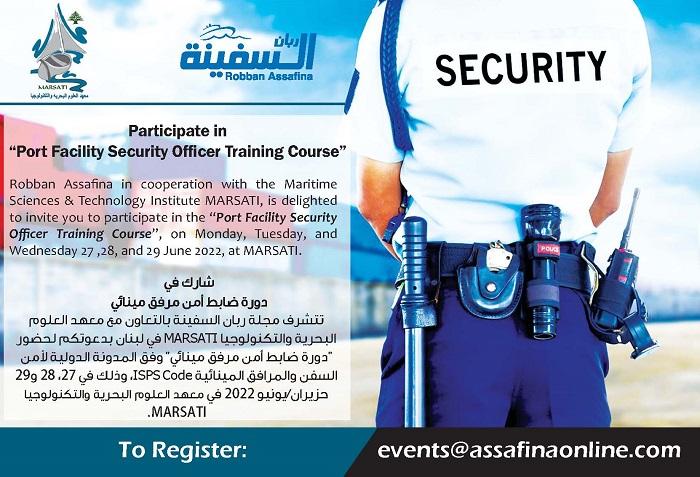
Each Port shall designate a Port Facility Security Officer (or Officers) (PFSO). The PFSO course, is mandatory training for those undertaking the duties of a Port Facility Security Officer for all ports.
This course provides training in Port Facility Security for appointed personnel and it will be delivered by the Maritime Sciences & Technology (MARSATI). It is designed to give delegates a full understanding and competence to perform the duties and responsibilities of a Port Facility Security Officer (PFSO). In particular, the PFSO duties and responsibilities with respect to the security of a port facility, the actions following on from a Port Security Assessment, the development of, implementing, maintaining and updating of a Port Facility Security Plan (PFSP) and the requirements for liaising with Port Authorities, Ship Security officers (SSOs) and Company Security Officers (CSOs).
Course Objectives:
- Knowledge of the ISPS Code and regulations
- Roles & responsibilities of security officers in ports and on ships and offshore facilities
- Roles & responsibilities of Governments and industry participants - working relationships
- Principles of security - physical, technical and manpower
- Identifying maritime & offshore security threats and making decisions
- Training drills, exercises, internal and external audit requirements
- Access control of ships, ports, port and offshore facilities, security zones and identification systems
- Security risk assessment principles
- Security assessments: vulnerabilities and treatments
- Security plans - structure, development, maintenance and going beyond compliance
- Maritime security levels, responding to security threats and directions
- Terrorist behaviour and methods of concealment of weapons of terrorism
- Control measures, powers of officials, incident reporting obligations and penalties
- Developing and maintaining a security awareness and vigilance culture
Benefits of Attending:
- This training provides a rapid and comprehensive programme that enables port authority and port operator to meet the requirements of the ISPS Code.
- Organize and ensure that port facility assessments are carried out and the findings used in the port facility security plan development.
- ensure the development, submission for approval and, thereafter, the implementation and maintenance of the port facility security plan.
- enhance security awareness and vigilance while ensuring security communication and co-operation between the srelevant parties.
- Undertake internal audits and review security activities.
Who should attend?
- Port personnel and those designated having specific security function and duties in a port facility.
- Masters who intend to enter deeply into the port facilities security issues; personnel who will be Port Facility Security Officer.
- Security staff members in the port facilities.
- Personnel to operate under the ISPS regulations ashore.
- All personnel who intend to participate in developing and improving the port facility security plan and system, the Port Facility Security Assessment and drawing up of the Port Facility Security Plan.
Course Duration:
3 Days: June 27, 28 & 29, 2022
To participate, please send email to:
events@assafinaonline.com OR Call us at: +961 5 815835