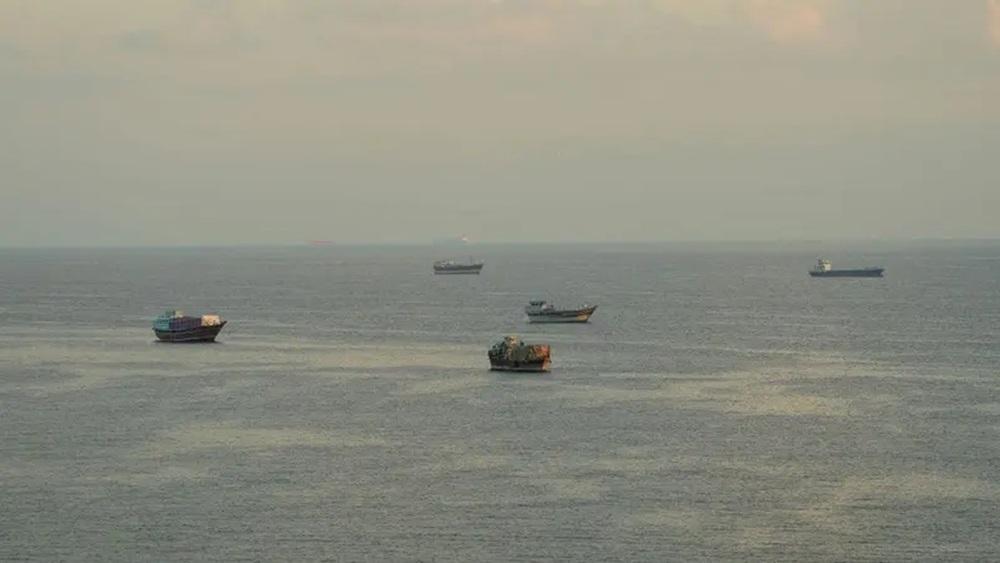
Around 70m barrels of hydrocarbons are lost yearly due to evaporation of volatile organic compounds (VOCs) during loading, storage and transportation of crude oil on ships, representing a value of $3bn to $3.5bn.
VOCs are a large group of organic compounds. Several light hydrocarbons, such as methane, ethane and propane, are VOCs. Due to high vapor pressure, VOCs can easily evaporate. To the oil industry, evaporation of hydrocarbons equals economic loss.
A study by Bhatia and Dinwoodie, University of Plymouth, UK, revealed that for a standard ship such as an aframax tanker, the economic loss during a single voyage with a full tank amounts to more than $40,000.
In their article, Bhatia and Dinwoodie undertook the task of calculating empirical losses in North Sea operations and investigating technical factors influencing these losses.
- Joint industry guidance on the supply and use of 0.50% – sulphur marine fuel
- IMO's MSC addresses reporting for containers lost at sea
- ABS and American P&I Club Continue Close Collaboration On Loss Prevention Initiatives
- IMO Brings Forward Publication Of Fourth GHG Study
- Video: cargo ship losses stability dumping containers into harbor
“Historically low crude oil prices generated little interest in losses under 0.5 %, but today oil majors host loss control departments investigating how the tonnage employed, type of crude, varying load and discharge ports and evaporation during cargo operations affect losses,” Bhatia and Dinwoodie stated.
As a consequence of this and other studies, countries and organizations would begin initiating VOC emission control regimes. One frontrunner country is Norway, where studies show that shuttle tankers operating on the Norwegian continental shelf and entering Norwegian ports represent a large portion of Norway’s national emissions. Therefore, a national scheme was introduced, requiring such tankers to undertake the innovation of valve design emission reduction measures. Several other countries have since adapted similar schemes.
The International Maritime Organization (IMO) has established itself as the main forum for the long-term reduction of adverse environmental effects from the shipping industry, with VOC as one of several areas of concern.

The Norwegian researchers recommended that loading systems for tankers were modified so under pressure was replaced by positive pressure. Over the following years, several tankers were equipped with such new technology, allowing VOC generation to drop by 70 to 90%.
The studies went on to estimate that as much as 9m tons of VOC were emitted annually from global crude oil loading and transport, with about 5m tons emitted during the actual transport. The figure corresponds to about 70m barrels of light end hydrocarbons, representing a value of between $3.0 and $3.5bn USD annually.
Source: Splash 247