
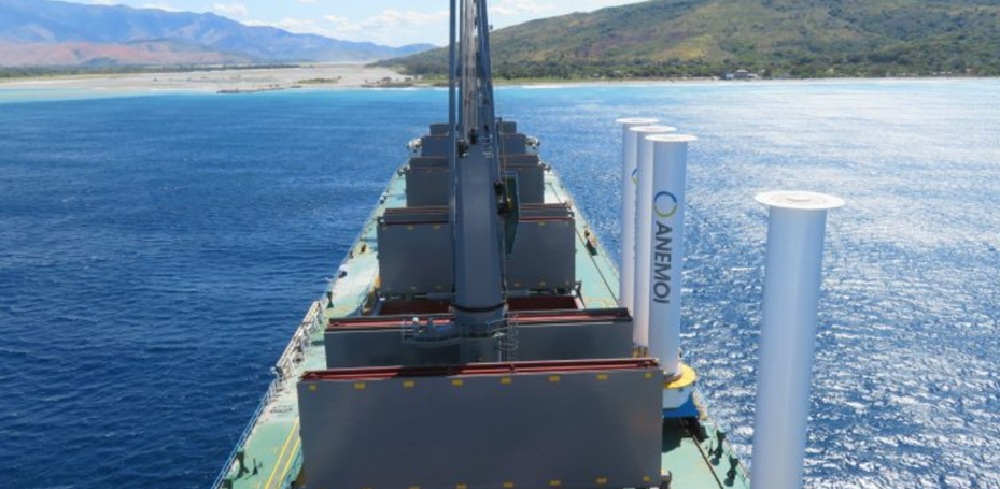
According to the International Windship Association (IWSA), wind propulsion in commercial shipping has reached a major milestone, with more than 100 large cargo vessels now equipped to harness wind energy.
These ships represent over 5 million tons of cargo-carrying capacity and use more than 230 wind propulsion systems, collectively reducing CO₂ emissions by over 100,000 tons annually. The sector has expanded rapidly, with the number of wind-powered vessels roughly doubling each year, reflecting growing confidence in wind technology as a practical decarbonization solution.
"This surge of installations has been driven by a sustained rise in full-scale testing, independent verification and commercial validation of systems over the past five years, giving shipowners growing confidence in the operational and financial case for adoption. However, we can go further and faster on these installations, with everyone focused on the scaling towards the 1,000 ships and beyond"
… said Gavin Allwright, Secretary General of the IWSA.
Allwright pointed out that reaching the 100-ship, 200+ systems installed milestone represents an important market marker for wind propulsion technology. At this point, we can expect a sustained reduction in return-on-investment timeframes, particularly if fuel prices remain high, as manufacturing scales up and installation experience grows, Allwright stressed.
"It is increasingly clear why wind is such an attractive option for shipowners: it offers positive financial returns, increased energy security, measurable decarbonization gains and technology pathways that can support compliance with tightening emissions regulation today"
… he commented.
During the 2025 GREEN4SEA Singapore Forum, Gavin Allwright discussed the potential of wind propulsion as a solution for reducing greenhouse gas, saying that wind is entirely natural, it doesn’t need to be mined, refined, transported, bunkered, or stored on board. It arrives directly at the point of use, with no emissions and no cost, ever. That’s a major difference compared to other energy sources.
Rapid growth and expanding adoption
Growth has been particularly striking over the past four years. In 2022, only 21 large commercial vessels used wind propulsion, representing about 1 million DWT. Today, that figure has increased nearly fivefold. Available technologies include rotor sails, suction sails, wing sails, traction kites, and traditional sail systems.
Tankers and bulk carriers currently lead adoption, followed by RoRo/RoPax and general cargo vessels.
Strong market outlook despite uncertainty
IWSA attributes the surge in installations to increased full-scale testing, independent verification, and commercial validation, which have strengthened the business case for wind propulsion.
Despite uncertainty surrounding global shipping decarbonization policies, the industry maintains a healthy pipeline of retrofit and newbuild projects. The association expects the number of wind-equipped vessels to double again over the next 12 months, reaching around 200 large commercial ships.
"With all of the current uncertainty surrounding the IMO global decarbonization framework and geopolitical upheaval, we still see a relatively healthy pipeline of retrofit and newbuild orders and construction underway. We estimate that the number of wind propulsion installed ships will once again double in the next 12 months, amounting to around 200 large commercial vessels in total by this time next year"
… Allwright explained.
Wind power’s role in shipping decarbonization
Wind propulsion can typically provide 5–20% of a vessel’s propulsive energy when retrofitted, with even greater contributions possible in purpose-built ships. As fuel prices remain volatile and emissions regulations tighten, wind energy is becoming an increasingly attractive option for shipowners, offering lower fuel consumption, reduced emissions, improved energy security, and a commercially viable pathway toward cleaner shipping.
Further projections from past EU-commissioned research and the UK Clean Maritime Plan have estimated a penetration rate of up to 15% of the fleet using wind by the early 2030s and 40-45% by the 2050s.
If the shipping industry and regulators decide to set an ambitious course towards zero emissions, these projections could even prove to be conservative.
Robban Assafina is now on WhatsApp channel. Click Here


