
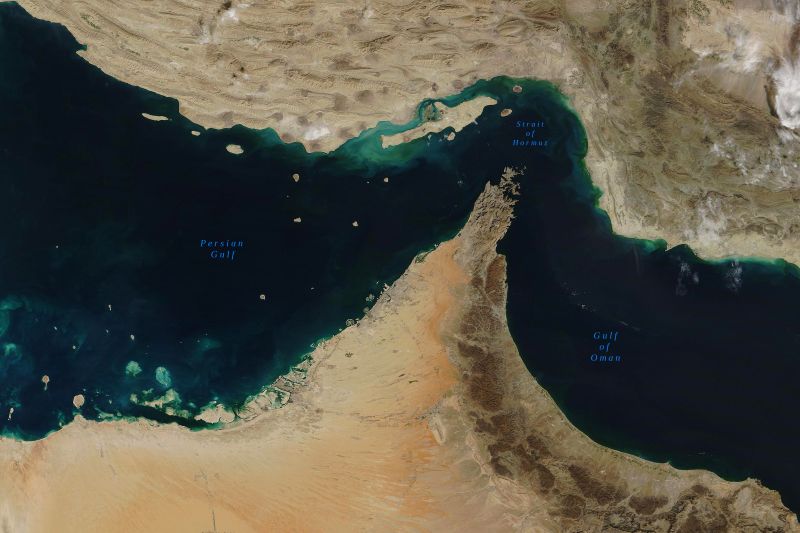
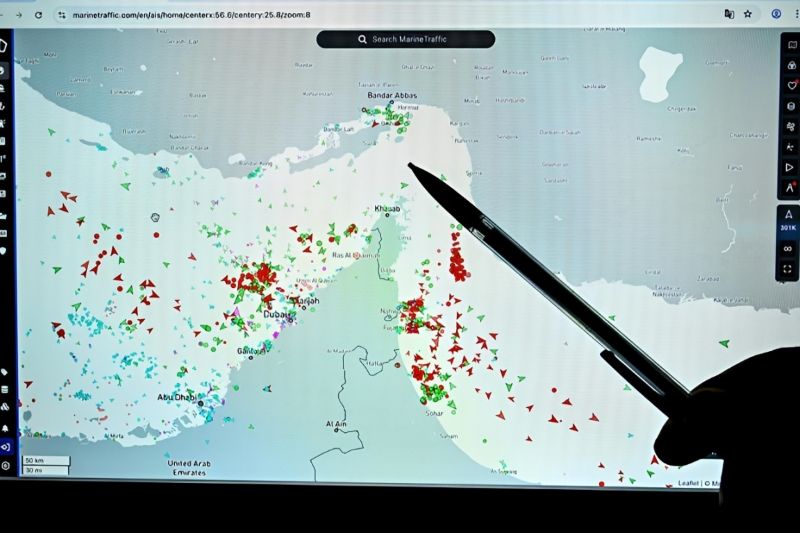
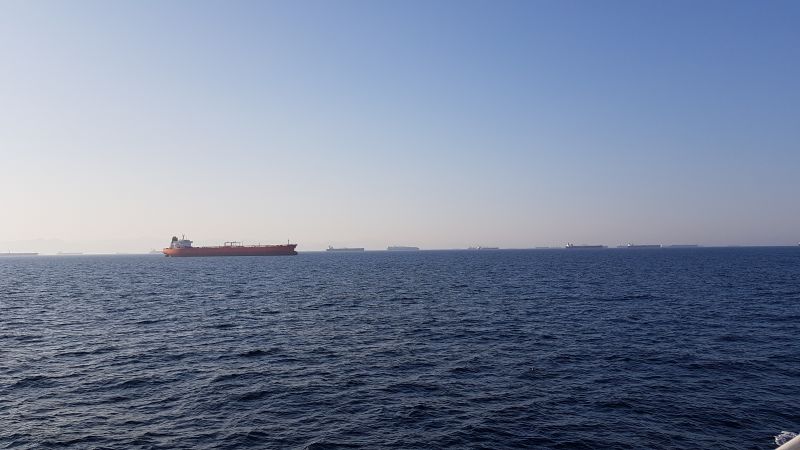
In an era where geopolitical instability is increasingly shaping maritime operations, the Strait of Hormuz is emerging as a focal point of disruption across global shipping, logistics, and trade. Driven by escalating security risks, evolving control mechanisms, and rising commercial pressures, the maritime environment in this critical corridor is undergoing a profound transformation affecting vessel movement, energy flows, and supply chain stability.
In this issue of Robban Assafina, legal, insurance and maritime experts examine how the situation is extending beyond navigation challenges to impact logistics structures, insurance frameworks, and contractual risk allocation. They provide insight into the operational, financial, and legal pressures reshaping the sector while highlighting the strategies required to navigate an increasingly complex and high-risk maritime landscape.
Rising Geopolitical Tensions
In the current geopolitical environment affecting the Strait of Hormuz, legal analysis within the maritime sector is centered on the direct interaction between international maritime law, sanctions frameworks, and contractual obligations, with law firms advising on real-time operational, compliance, and liability implications arising from navigation in a high-risk corridor.

Dr. Abdulamir Alfaraj
In this regard, Dr. Abdulamir Alfaraj, Legal Expert in maritime law, states that such advice is grounded in the interpretation and application of international maritime law, relying primarily on the United Nations Convention on the Law of the Sea (1982), which he identifies as the principal legal framework governing navigation in international straits, including the right of transit passage for all vessels without measures such as inspection or detention, alongside the conventions of the International Maritime Organization concerning the safe passage of ships.
“The Strait of Hormuz has been classified as a high-risk area, which requires precise daily analysis by insurance companies for pricing purposes, as well as consideration of the legal obligations of coastal states under international conventions related to ports and vessel classification, adding that any violations of these agreements may result in sanctions against non-compliant states.”

Dr. Bader AlBusaiyes
Dr. Bader AlBusaiyes, Founder & Managing Partner at AlSuwaiket and AlBusaiyes Lawyers and Legal Consultants LLC, agrees on this saying that the Strait of Hormuz has always been a critical artery, yet today it has become a more complex live legal and operational risk corridor, where geopolitical tension is directly reshaping how maritime law is applied in practice.
Dr. Bader continues that the contractual risk allocation is emerging as one of the most critical pressure points. Many charterparties and trade contracts were not drafted with sustained geopolitical disruption in mind. “As a result, we are seeing growing exposure around force majeure, war risk, and deviation clauses. In our view, the next wave of disputes in this space will not be driven by the disruption itself, but by how risk was (or was not) allocated contractually.”

Lawyer Tarek Saad
War-risk Issues
As for Tarek Saad and Simon Isgar, Partners at BLK Partners, they believe that the advice has shifted from theoretical geopolitics to live operational triage. With fresh maritime access restrictions affecting Iranian ports and coastal areas, and U.S. blockade measures now being reported as in force in relation to Iranian port traffic, firms are advising owners, charterers, traders, cargo interests and lenders on a three-track basis: legality, insurability and voyage viability.

Lawyer Simon Isgar
They explain this by saying that on international law, the starting point remains transit passage through straits used for international navigation under UNCLOS, but that principle does not eliminate the real-world overlay of military risk, sanctions exposure, port state controls, or insurer withdrawal rights. “On sanctions, law firms are telling clients that Strait risk is no longer just a war-risk issue. It is also a sanctions due-diligence issue: cargo provenance, vessel ownership, AIS integrity, STS history, counterparties, payment routing and port nexus all need real-time review.”
From another viewpoint, Ahmed Moubayed, a lawyer, highlights that one of the most prominent logical and legal fallacies in contemporary Iranian political discourse, is the attempt to claim moral legitimacy or project an illusory sense of “favor” toward the international community in relation to the Strait of Hormuz.
Moubayed further explains, “Under the United Nations Convention on the Law of the Sea a fundamental distinction exists between artificial canals and natural straits. Canals such as the Suez Canal and Panama Canal are entirely artificial waterways that would otherwise remain land and therefore fall under full sovereign control, where tolls are justified as cost recovery for construction and maintenance. In contrast, natural straits like Hormuz are maritime passages connecting two high seas or exclusive economic zones, where international law guarantees the right of transit passage without restriction and prohibits coastal states from imposing fees for passage.”
Maritime and International Laws Applied
Maritime and international laws constitute the legal frameworks applied by law firms when classifying and advising on recent incidents in the Strait of Hormuz. In this context, Tarek Saad & Simon Isgar believe that classification is everything. “The same event may be argued as a hostile act, war risk, terrorism, sabotage, piracy, detention, seizure, unsafe port event, force majeure trigger, or mere delay. Each label carries different consequences for liability, cover and forum.”
Dr. Abdulamir reaffirms that UNCLOS 1982 remains the principal reference for determining the legal status of the Strait of Hormuz and the rights of transit passage without obstruction, as well as the right of innocent passage within territorial waters provided it does not threaten coastal state security. He adds that maritime incidents are assessed based on the legal liability of the parties involved in maritime transport and the seaworthiness of vessels.
Dr. Abdulamir, Tarek Saad & Simon Isgar also agree that the Safety of Life at Sea (SOLAS) Convention governing maritime safety rules for crew, the International Regulations for Preventing Collisions at Sea defining navigational fault and avoidance of maritime accidents, the Hamburg Convention of 1978, BIMCO charter-party contracts, the Brussels Convention of 1924, and marine insurance law in determining whether risk is classified as war risk or navigational risk.
Additionally, firms are applying a combination of international maritime law, particularly the rules on transit passage under the law of the sea, alongside laws of armed conflict at sea and sanctions regimes, as Dr. Bader states. In practice, these frameworks overlap. A single incident may simultaneously raise issues of freedom of navigation, hostile or warlike activity, and regulatory exposure linked to sanctions.
“The critical issue is how the event is characterized. If an incident is treated as a war risk or hostile act, it typically triggers war risk insurance and may justify deviation or suspension of contractual obligations. If, however, it is framed as a sanctions-related issue, insurance coverage may be restricted or denied altogether, with liability shifting back to the commercial parties. Where the issue is approached as a contractual disruption, the outcome will depend heavily on the wording of force majeure, war risk, and safe voyage clauses.”
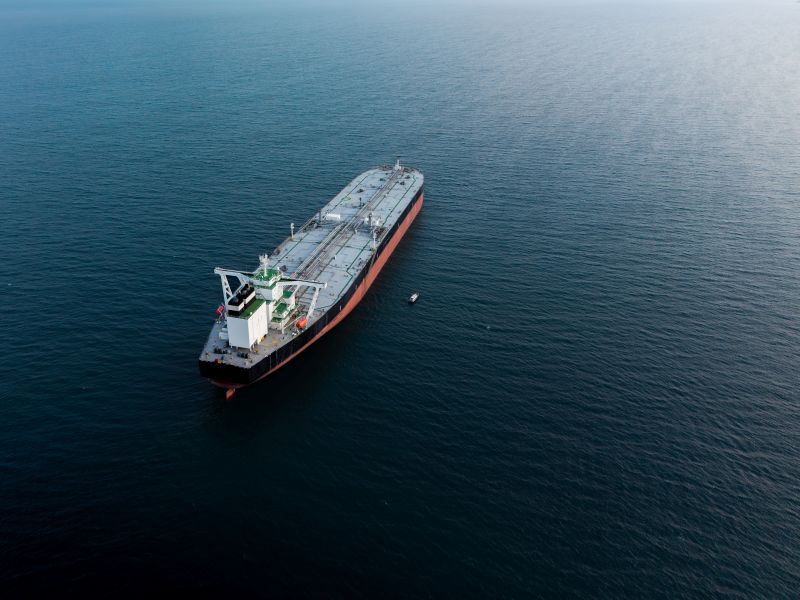
Charter Parties and Trade Agreements
In the context of heightened instability, there are law firms guiding shipowners, charterers, and cargo interests in interpreting contractual obligations under charter parties and trade agreements. The most practical advice is “do not assume the contract will save you if the insurance fails, and do not assume the insurance will save you if the contract allocates the risk against you”, as Tarek Saad & Simon Isgar believe. “For shipowners, the immediate questions are whether the vessel can be ordered to proceed, whether the area has become a war-risk area, whether additional premium is recoverable, whether refusal is justified, and whether rerouting is commercially safer than litigating later.”
They continue, “For charterers, the pressure point is exposure to delay, extra hire, fuel, substitute tonnage, demurrage, sanctions breach and frustrated downstream sale contracts. The legal test is rarely abstract; it turns on the exact wording and the evidence available at the time the voyage decision was taken. As for cargo interests and traders, the critical question is whether cargo war cover, strikes cover, delay exclusions and warehouse-to-warehouse structures are actually fit for a chokepoint conflict.”
“Many losses in these situations are not total loss claims at all; they are delay, detention, rejection, deterioration, sanctions non-payment, or failed delivery-window claims. That is why firms are urging cargo interests to align sale contracts, letters of credit, marine cargo wordings and sanctions representations before the next fixture, not after the casualty.”
Legal Considerations
In light of increasing instability in the region, law firms guide ship owners, charterers, and cargo owners in interpreting contractual obligations under charter-party agreements, Dr. Abdulamir says. “This includes clarifying the scope of force majeure clauses, the extent of parties’ obligations to perform maritime transport contracts, and assessing the legality of decisions taken by carriers to deviate from the voyage route to avoid risks. This ensures the continuation of contract performance without resorting to termination, while taking into account the relevant commercial and legal considerations.”
From another level, Dr. Bader states that insurance and financing structures are under strain, with war risk premiums, sanctions exclusions, and coverage limitations influencing operational decisions at sea, creating closer integration between legal advice, insurance placement, and commercial strategy. He also highlights that dispute readiness has become standard practice, with operators systematically documenting voyage decisions, compliance processes, and communications in anticipation of future claims or arbitration.
The experts conclude that the Strait of Hormuz is no longer merely a passage but “a high-scrutiny legal environment,” where operational decisions are made under expectation of future review, and where success depends on integrating legal strategy into daily operations rather than treating it as a back-end function. The clients best placed to ride this period are the ones treating legal, insurance and operational decisions as one integrated risk function, not three separate silos.
Marine Insurance and Risk Dynamics
The current maritime environment in and around the Strait of Hormuz is reshaping how marine insurance is interpreted, triggered, and disputed. In the current Hormuz environment, engagement with insurers and P&I clubs has become far more strategic. The key issue is no longer simply whether a loss occurred, but how that loss is characterized under the policy framework, particularly in distinguishing between standard marine risks and war risks, as Dr. Bader AlBusaiyes believes.
He further emphasizes that legal strategy is now driven by timing and alignment with insurers, noting that shipowners and operators are being advised to notify under both P&I and war risk policies at the earliest stage, while carefully framing the incident in a way that preserves coverage. “The classification of an event, whether as a hostile act, warlike operation, or a standard navigational incident, can determine which policy responds, or whether coverage is disputed altogether.”
Strategic Insurance Positioning
From another viewpoint, Dr. Abdulamir AlFaraj states that coverage of losses resulting from delays, such as port closures or transit disruptions, is assessed based on the terms of the insurance policy concluded between the insurer and the insured.
“In most cases, such losses are not covered unless they are linked to direct physical damage, and delay is considered a time-related loss that results in indirect financial damage and therefore does not fall within the scope of traditional insurance coverage.”
He further clarifies that insurance coverage is generally restricted to cases of total loss or physical damage affecting the vessel or cargo as a result of war risks or disturbances, provided that direct damage occurs, while losses resulting from delay, such as demurrage or loss of markets, are not covered unless explicitly provided for under additional special clauses in the policy.
Additionally, Dr. Abdulamir points to more complex scenarios where coverage can expand, particularly in relation to strategic maritime disruptions. “In cases involving the closure of key routes such as the Strait of Hormuz, coverage may extend to constructive total loss or losses resulting from vessel detention, provided that this is explicitly stated in the insurance policy, while war risk coverage remains limited to material losses and subject to specific conditions.”
War Risk Insurance Market
As the insurance structure becomes more segmented, the interaction between different layers of cover becomes increasingly important. As Tarek Saad & Simon Isgar explain, “Insurability ultimately hinges on whether war-risk underwriters are willing to support the voyage and on what terms that support is extended, particularly in relation to the distinction between covered and excluded perils within the insurance response framework.”
“At the same time, conventional marine insurance is described as property-focused, where Hull & Machinery policies cover physical damage to the vessel and cargo insurance addresses loss or damage to goods, while war risks are generally handled through separate policies or endorsements, often subject to short-notice cancellation depending on market conditions and risk assessments.”
Tarek Saad & Simon Isgar also say that in practice, this creates a structural gap where a vessel may remain fully insured from a P&I perspective while still facing significant commercial exposure if hull or cargo war-risk cover is withdrawn or repriced. They explain, “This produces a grey zone in coverage, positioned between terrorism or sabotage risks that may still be covered under certain conditions, and state-on-state conflict, which is more commonly excluded or heavily restricted.”
Policy Conditions
According to marine insurance market and P&I club observations, the Strait of Hormuz is currently operating under heightened geopolitical pressure, with underwriting conditions shifting into a defensive mode.
Coverage remains primarily focused on physical damage, leaving a gap for delay-related losses unless extensions such as Loss of Hire are in place. As a result, insurers are placing increasing emphasis on compliance with policy conditions, particularly voyage declarations and deviation justification.
The legal dimension is also becoming more prominent, with rising disputes over unsafe ports, deviation, force majeure, and coverage interpretation. In this environment, strict adherence to notification requirements and documentation is critical, as insurers closely assess whether shipowners’ actions are reasonable and policy compliant.
Overall, the market reflects a high-alert underwriting environment characterized by elevated premiums, tighter conditions, reduced flexibility, and increased legal scrutiny, driven primarily by incident-based volatility rather than structural repricing, though this could shift rapidly if escalation intensifies.
Finally, it is noted that war cover, if available, is currently seen around 2.5% and 0.5% as before, with some insurers still able to offer it under current conditions.
Shipping Face Rising Pressure
In the current geopolitical environment affecting the Strait of Hormuz, maritime operations and global logistics are being shaped by escalating security risks, evolving control mechanisms, and mounting commercial pressure. The situation has developed into a live operational disruption affecting vessel movement, supply chains, and energy flow through one of the world’s most critical maritime corridors.
In response to the crisis, the International Maritime Organization (IMO) is preparing a plan to evacuate around 800 vessels still stranded in the Strait. IMO Secretary-General Arsenio Dominguez states that the evacuation can only proceed if the conflict de-escalates and the region is confirmed safe, particularly free from threats such as naval mines.
Dominguez explains that the plan is designed around the creation of a “safe maritime corridor,” prioritizing the evacuation of seafarers rather than cargo, with ships departing in an organized sequence partly based on how long crews have been stranded. Any movement would follow the long-established Traffic Separation Scheme developed by Iran and Oman and adopted by the IMO in 1968.
Crisis of Stranded Seafarers
Dominguez also issues a strong warning on the broader security situation at sea, stating “The attacks and seizures of commercial vessels are unacceptable and must stop immediately, along with the release of all ships and seafarers being held.” He further emphasizes the human dimension of the crisis after speaking with a stranded seafarer in the Persian Gulf, who describes constant stress from missiles overhead, risks of debris striking the vessel, rationing of supplies, and difficulty maintaining contact with family members.
While that individual was eventually able to leave, Dominguez notes that nearly 20,000 seafarers remain stranded after more than seven weeks, still uncertain about when they can return home.
Cost Pressure
Alongside the security situation, reports circulating in maritime and energy circles indicate the emergence of enhanced inspection and clearance procedures applied to certain vessels transiting the Strait of Hormuz, particularly oil tankers. These mechanisms reportedly require detailed submission of vessels, cargo, and crew information through intermediaries, in exchange for transit approval and substantial fees.
According to these reports, the process begins with vessel owners or operators engaging approved intermediaries said to be linked with relevant authorities in Iran. These intermediaries collect comprehensive documentation, including the vessel’s IMO number, ownership and management details, cargo information, destination, and full crew list. The material is then subjected to multi-layered review processes, including sanctions screening, cargo verification, particularly for oil shipments, and assessment of geopolitical risk factors.
If a vessel passes these stages, a clearance code and specific routing instructions are issued. Transit procedures reportedly include VHF communication, AIS verification, and escort by patrol vessels, with movement in some cases limited to one vessel at a time.
Within this framework, additional logistical cost pressures have also been reported. Fees imposed on each oil tanker are said to reach approximately USD 2 million, which for Very Large Crude Carriers (VLCCs) carrying around two million barrels would equate to roughly one dollar per barrel. Circulated information further suggests that the Chinese yuan is among the preferred currencies used in these transactions.
Additionally, observers note that, if confirmed or broadly implemented, such mechanisms would significantly increase shipping costs, raise insurance premiums, and disrupt the efficiency of global trade flows. Given the Strait of Hormuz’s role as a critical energy corridor, even marginal cost increases at this scale are viewed as having wider implications across global supply chains and energy pricing structures.

Mr. Rayan Qutb
Regional logistics resilience
From a broader supply chain and operational standpoint, Rayan Qutb, Chairman of the Logistics Council at the Jeddah Chamber, confirms that the recent developments in the region related to the Strait of Hormuz represent an opportunity to enhance the resilience and continuity of supply chain systems, noting that the Kingdom is managing this phase through a balanced approach combining immediate operational response with a long-term strategic vision.
He adds, “The current efforts are not limited to ensuring the uninterrupted flow of goods and serving local and Gulf markets, but also extend to accelerating the development of the logistics system and transforming these challenges into an opportunity to enhance efficiency and integration.”
From an infrastructure perspective, Qutb highlights the diversity of maritime gateways between the Arabian Gulf and the Red Sea, stating that this enables flow distribution without reliance on a single route, supported by multiple high-capacity ports that enhance flexibility in redirecting traffic. This is further reinforced by road, rail, and logistics networks that improve redistribution and shock absorption.
At the governance level, he emphasizes strong public-private coordination, reflected in “direct communication, daily operational handling, and rapid decision-making,” enabling efficient resolution of transport and customs challenges.
Strengthening Movement Flexibility
Qutb also notes regulatory flexibility, stating that the Zakat, Tax and Customs Authority allowed transit transport activities without requiring a bank guarantee and enabled internal transit between air and seaports without transit plates.
He stresses that supporting exports improves shipping efficiency, “the better the balance achieved between imports and exports, the more efficient shipping line operations become, resulting in lower overall costs.” Also, he describes the system as interconnected corridors linking ports, dry ports, and logistics hubs in cities such as Riyadh and Dammam, extending to Mediterranean access through land and rail connectivity.
He adds that airports support continuity through air cargo flows from Gulf countries, ensuring the continued flow of sensitive and urgent shipments. “At maritime level, operational readiness, vessel support, fuel availability, and efficiency improvements have strengthened movement flexibility.”
He concludes, “automation and digital platforms have become an essential part of improving system efficiency through accelerating procedures and improving coordination between entities.”
Supply Chain Risk
As the operational environment tightens, attention has shifted beyond vessel movement to the broader logistics chain. According to Tarek Saad & Simon Isgar, the pressure is no longer confined to shipping operations alone but is increasingly affecting trade finance, cargo flow, and contractual stability.
They state, “Beyond the vessel itself, pressure is building across the wider logistics chain. Charterers face the risks of substitution and broader supply chain failure, while cargo interests are exposed to delay and non-delivery risks that often exceed physical loss. At the same time, letters of credit structures and sale contracts may fail before insurance responds, amplifying disruption across the trade flow.”
They conclude that market practice is shifting toward more structured risk management, “What constitutes best practice in this environment is becoming more defined. The market is converging on a disciplined approach that includes pre-fixture sanctions and counterparty diligence, tight documentation of decisions and risk assessments, and alignment between contracts, insurance, and financing. The clients best placed are not the most aggressive, but the most coordinated.”
Robban Assafina is now on WhatsApp channel. Click Here
|
To read the full content, click on the following link: Robban Assafina, Issue 102, April/June 2026, Maritime Host, pg.78-79 |


