The ITF Seafarers’ Trust (ITFST) and the World Maritime University (WMU) have underscored ongoing barriers seafarers face on taking shore leave based on data collected from 5,879 seafarers who participated in the ITFST Shore Leave Survey.
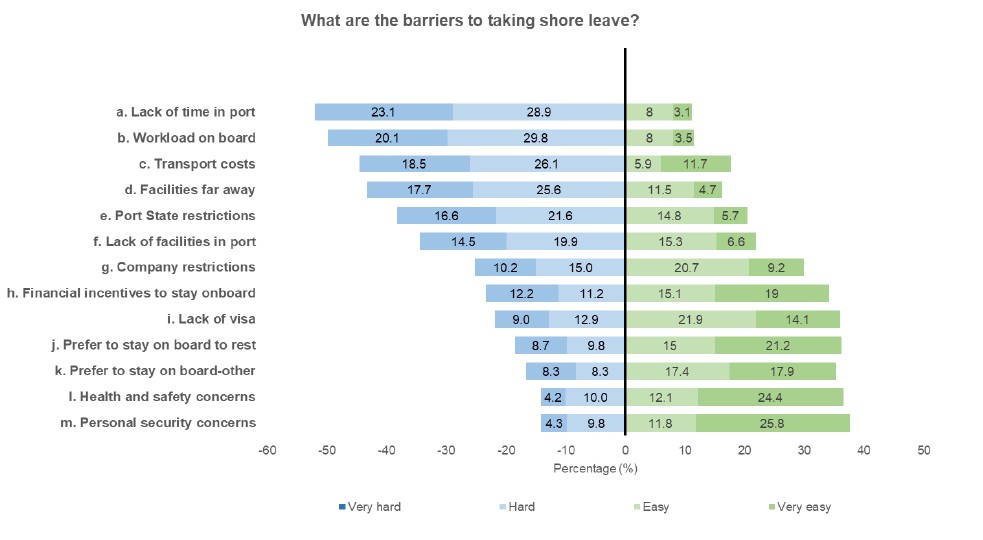
The report “Shore Leave: Rare, Brief and in Danger of Extinction”, reveals seafarers’ comments regarding shore leave barriers, from the ITFST Shore Leave Survey. The insights identified predominant themes mainly focused on port State restrictions, the workload on board, lack of time in port, company restrictions, transport costs and lack of facilities, mainly transport.
Credit: ITFST
Combining multiple factors produces a quasi-impossibility to access shore leave
According to the survey, the most significant number of comments referred to port State restrictions, mainly highlighting port bureaucratic hurdles, authorities’ inspections waiting time, port strict security measures or local regulations (tightened after the COVID-19 pandemic and linked to higher charges), and discriminatory treatment for seafarers (i.e., certain nationalities) leading to difficulties in facilitating or even denying shore leave.Furthermore, comments regarding workload on board as a major barrier to shore leave were often linked to ship inspections and increased operational demands, such as maintenance, when in port. Respondents also emphasized the lack of time available during port stays, noting that the mere availability of shore leave does not guarantee the opportunity to go ashore.
As a result, seafarers are often forced to choose between limited rest on board and a rushed trip ashore.
"Usually, matching the work/rest balance is complicated, as you count with few hours between watches or the overtime you must do. Therefore, you always need to sacrifice your rest in order to go ashore. " a respondent on the survey highlighted.
A significant number of comments highlighted company-imposed restrictions, including the withholding of shore passes, requiring crew to remain on board for work, or pressuring them to return quickly. High transportation costs, such as fees for shore boats, were frequently cited as another barrier, particularly by seafarers working on tankers.
In addition to these known obstacles, comments revealed three emerging themes related to the obstruction of shore leave: onboard management, the role of port agents and unethical port practices.
Criticism was also directed at port agents, who were reported to delay the issuance of shore passes or charge excessive fees to crew members. “Unethical” practices in certain ports were also described, including unfair treatment and systemic barriers that further hinder access to shore leave.
Additional comments underscored the critical importance of shore leave for seafarers’ well-being, with some even suggesting that shore leave should be made mandatory to support the mental and physical health of the crew.