
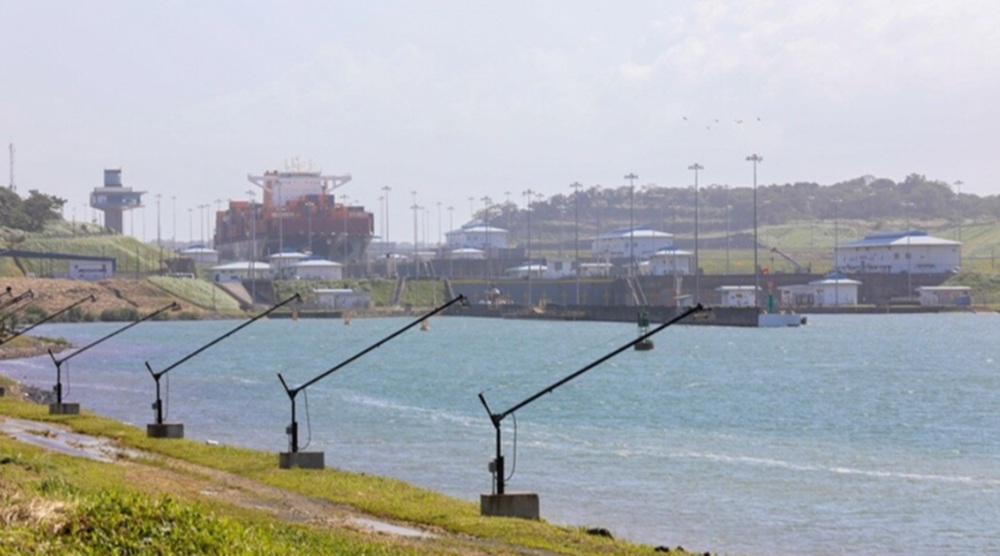
The Panama Canal is projected to surpass its initial fiscal 2026 revenue estimate of $5.2 billion, supported by a surge in vessel traffic following the temporary closure of the Strait of Hormuz in recent months, according to Bloomberg.
The disruption diverted additional shipping flows through the key waterway connecting the Caribbean Sea and the Pacific Ocean, with daily crossings rising to as many as 41 ships at peak levels compared with a normal range of 34 to 35 vessels.
Ilya Espino de Marotta, the Panama Canal Authority’s incoming administrator, told Bloomberg that revenue for the fiscal year ending Sept. 30 would come in “a little bit more” than earlier projected, supported by stronger traffic and higher auction payments from ships seeking faster passage.
The canal handled 40 to 41 vessels per day at the peak of the Hormuz closure, above the usual 34 to 35 daily transits, Espino de Marotta said. Traffic has since eased to around 36 to 38 ships per day, while bookings for June and July remain strong.
The liquefied natural gas (LNG) tankers increased their use of the canal as buyers in Japan, China, and South Korea turned to US suppliers to replace Middle East producers affected by the conflict involving Iran, according to the report. Oil tankers carrying US crude to Asia also boosted canal traffic.
The canal is currently handling an average of one LNG tanker per day, as US suppliers continue shipments to Asia even after a deal to reopen Hormuz, according to Bloomberg.
Espino de Marotta, who has worked at the Panama Canal for 41 years and helped oversee its 2016 expansion, is set to take over as administrator in September for the 2026-2033 period.
She will supervise several major projects, including a new dam and reservoir, two ports, and a pipeline expected to carry liquefied petroleum gas or other hydrocarbons. The projects are estimated to cost about $8.5 billion in total and are targeted for completion by 2032.
The canal authority is prequalifying bidders for the reservoir and its own port terminals, with construction expected to begin in late 2027 or early 2028.
Bloomberg said financing for the dam is already secured, while the canal may turn to international markets and multilateral loans to fund part of the ports and pipeline.
The developments come after US President Donald Trump last year threatened to retake control of the canal, citing alleged Chinese interference. Panama’s top court later struck down a contract granted to Hong Kong-based CK Hutchison Holdings to operate two ports near the canal, after which the government placed the ports under interim operators.
Robban Assafina is now on WhatsApp channel. Click Here


