
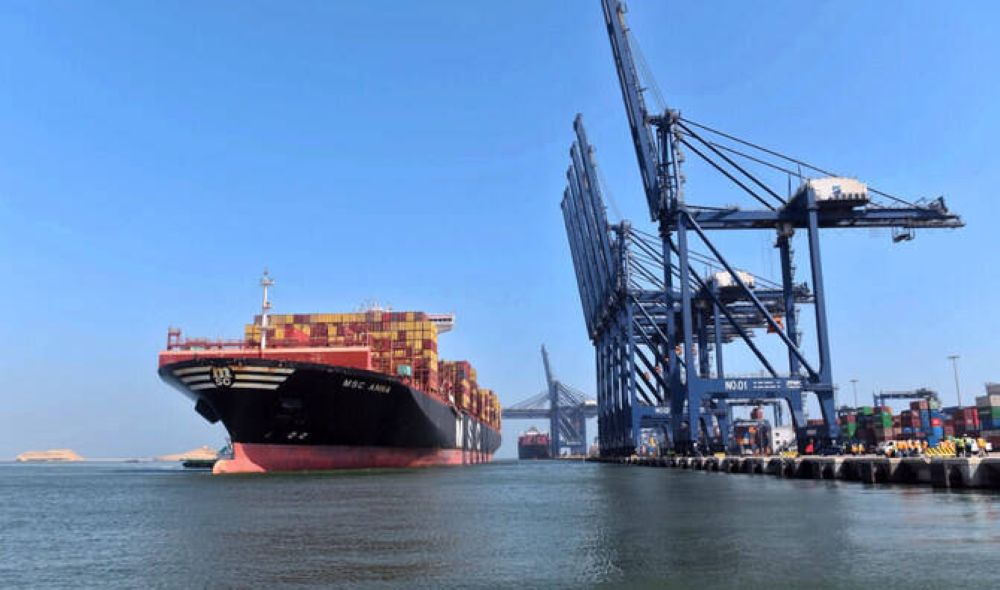
Pakistan is seeking to capitalize on shipping disruptions linked to renewed tensions around the Strait of Hormuz, with the Karachi Port Trust (KPT) aiming to increase container traffic by 20% over the next two years. The strategy focuses on attracting transshipment cargo traditionally handled by Gulf ports, positioning Karachi as a competitive regional logistics hub amid shifting trade routes.
The strategy reflects Islamabad’s broader push to position Pakistan as a regional logistics hub by persuading shipping lines to continue using Karachi even after regional tensions ease.
To do so, authorities are cutting port charges, expanding dedicated transshipment facilities and deepening navigation channels while seeking to capitalize on a surge in vessels diverting from conflict-affected Gulf ports.
“We have reduced our tariff for transshipment,” KPT Chairman Rear Admiral (r) Shahid Ahmed told Arab News on the sidelines of a briefing on Thursday.
“Until now, we have offered about 65 percent reduction in the port charges, and we are reducing it further,” he continued, adding that people should expect news about it “in a few days.”
Ahmed said KPT was also providing shipping lines with services including bunkering, crew changes and medical assistance “at a very economical rate as a goodwill gesture.”
According to projections presented during the briefing, the port expects container handling to increase by 20 percent over the next two fiscal years, with authorities projecting annual growth of 10 percent from 2.75 million twenty-foot equivalent units (TEUs) handled last fiscal year to 3.21 million TEUs in FY27 and 3.53 million TEUs in FY28. General cargo volumes are also expected to rise by up to 7 percent to 64.3 million tons over the same period.
Ahmed said the projected increase would be driven by transshipment cargo, transit trade and continued growth in Pakistan’s imports and exports.
The optimism follows a sharp rise in transshipment traffic after renewed fighting between the United States and Iran prompted shipping lines to divert vessels from Gulf ports to Karachi and Gwadar.
KPT Director Traffic Azam Ali Memon said Karachi Port handled 23,962 transshipment TEUs last year — the highest in the port’s 139-year history — but that figure has already been surpassed since the latest regional conflict erupted.
To sustain the momentum, Pakistan is deepening the navigation channel at Karachi Port’s East Wharf to 15.5 meters, designating 20,000 square meters as a bonded transshipment area and reducing both wet and dry port charges.
“We have reduced the wet charges and dry charges by more than half,” Memon said.
Wet charges cover navigational and harbor services such as pilotage, berthing and tug assistance, while dry charges relate to cargo handling and storage.
Private terminal operators, which stand to benefit from increased transshipment traffic, say the regional instability has created a rare opportunity for Pakistan but that retaining the additional business will depend on remaining competitive once shipping patterns normalize.
Hutchison Ports Pakistan Chief Executive CS Kim said his company was working with the government and shipping lines to attract more transshipment cargo.
“We are working together with [the Pakistani] government, and then also including our customers to bring more transshipment,” he told Arab News. “We are working hard.”
Asked how the conflict had reshaped Pakistan’s maritime industry, Kim said Karachi’s location just outside the Gulf had become an advantage for shipping lines seeking alternatives to regional ports.
“There is big potential for Karachi,” he said, adding that the situation could bring immense benefits to Pakistan’s economy.
Robban Assafina is now on WhatsApp channel. Click Here


