
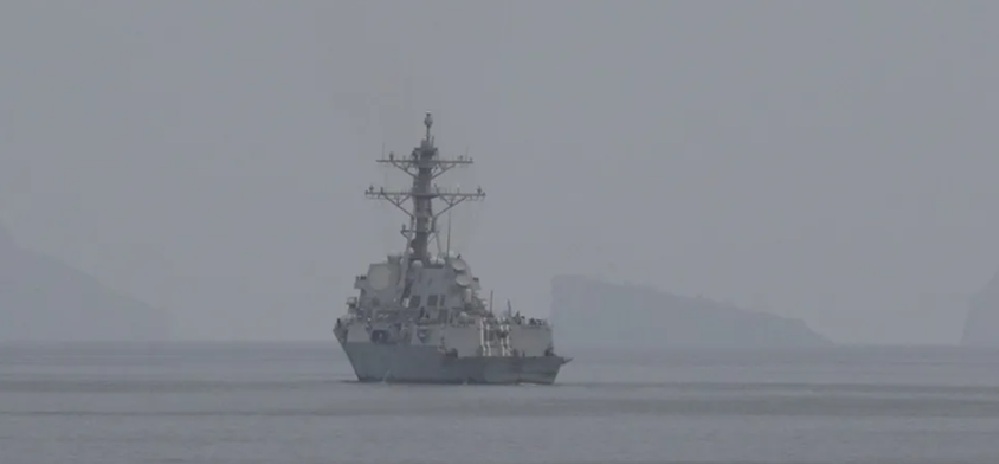
The Joint Maritime Information Centre (JMIC) has reduced the threat level to ships in the Strait of Hormuz to “Substantial”, but an attack remains a “strong possibility”
The change in threat level by JMIC comes following the announcement of a signing of a Memorandum of Understanding between the US and Iran expected on Friday. It is the lowest threat level since the war with Iran started on 28 February and two levels lower than Critical which it was rated at until early June.
JMIC said in an update on 16 June, “Maritime traffic continues under a substantial risk environment. Navigation interference and IRGC hailing and surveillance activity may persist. Short-notice interference remains possible; and an attack is a strong possibility. On-water IRGC behavior has become less volatile following the announced agreement on the US – Iran Memorandum of Understanding. US naval presence continues to provide stabilizing oversight.”
It also warned of a mine risk within and adjacent to the Traffic Separation Scheme (TSS) advising caution on all approaches.
There were reports of three explosions in the Strait of Hormuz during the night of 15 – 16 June which Iranian News Agency said were linked to traffic management. It’s unclear if the explosions were attacks on vessels or the result of mine clearance.
Shipping traffic in the Strait remains significantly reduced according to the JMIC with commercial vessels transiting via the southern route to the south of the TSS in Omani waters where the US military is providing facilitated transits.
The threat level in the Arabian Gulf and Gulf of Oman have also been reduced to substantial by the JMIC.
For the Arabian Gulf the update said: “The operating environment is assessed as substantial, with continued navigational system interference and residual kinetic risk. Rapid, short-notice actions near Iranian coastal waters and anchorages remain possible and an attack is a strong possibility under current conditions. Vessels stationary for extended periods, or maintaining AIS transmission while static, may still face elevated targeting risk.”
Describing the situation in the Gulf of Oman it said: "Naval activity remains present across the area. Vessels may still experience hailing, monitoring, and occasional verification queries, particularly when approaching the Strait of Hormuz or operating near coastal transit lanes. An attack is a strong possibility and suspicious approaches and electronic interference remain credible concerns."
Ship Masters were warned to maintain prudent standoff positions from naval vessels to avoid misidentification.
Robban Assafina is now on WhatsApp channel. Click Here


