
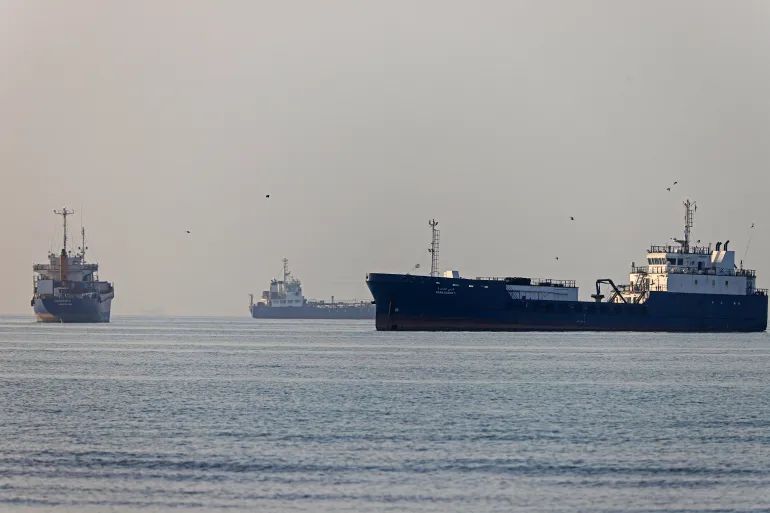
The Iranian Strait of Hormuz Management Authority announced that more than 300 non-Iranian vessels have submitted their data to obtain transit permits since the authority began operations in late April.
According to data issued by the authority, ships leaving the Gulf accounted for the largest share of requests at 77%, while ships entering it accounted for 23%.
The authority explained that the main destination for outgoing ships was Asian countries, primarily China and India, while the United Arab Emirates was the main destination for ships entering the Gulf.
Regarding the policies regulating maritime traffic, the authority confirmed that it does not have the authority to issue transit permits for ships belonging to "hostile" countries, in line with the declared policies of the Islamic Republic.
The agency added that, under the circumstances and restrictions resulting from wartime situations, priority in granting transit permits will be given to ships associated with allied countries that have common interests with Iran.
Tehran announced the establishment of the authority on May 5 and published a map outlining what it described as its "regulatory mandate," as areas on both sides of the Strait of Hormuz were drawn that Iran requires prior approval to cross .
This measure represents a shift in the reality of navigation in the Strait. Before the outbreak of the recent confrontations, the International Maritime Organization supervised the management of the passage of approximately 120 ships per day without imposing fees or prior permits. However, the Iranian Revolutionary Guard imposed strict restrictions following the American and Israeli strikes that targeted Iran, which led to a contraction in the movement of ships and their complete cessation at some times.
In response, the United States added the newly created Iranian body to its sanctions list. A statement from the US Treasury Department explained that the sanctions directly target the body responsible for regulating the passage of ships and collecting navigation fees, describing the Iranian measures as an attempt to impose illegal restrictions on international maritime trade.US Treasury Secretary Scott Bessent described Iran’s actions in the Strait as “extortion of global maritime trade,” and threatened sanctions and prosecution of any international parties dealing with this organization, warning that they would be held accountable due to the organization’s close ties to the Iranian Revolutionary Guard, according to his statement.
Robban Assafina is now on WhatsApp channel. Click Here


