
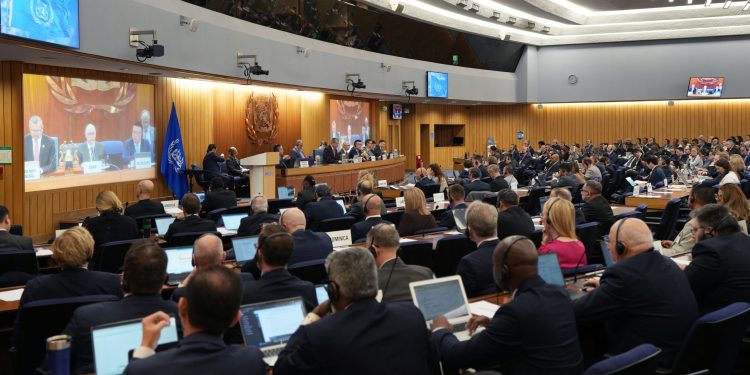
The IMO Human Element, Training and Watchkeeping Sub Committee (HTW) met in London from 23 – 27 February 2026 to discuss key developments in seafarer training, safety and regulatory standards.
The HTW in its 12th session focused on finalising draft interim guidelines for seafarers using alternative fuels, developing a workplan for future training standards and amendments to the STCW Convention and Code, amongst other developments. Key outcomes from HTW 12
- Two sets of draft interim guidelines for seafarer training were finalised
- A work plan was prepared for development of further guidelines on the training of seafarers using alternative fuels and new technologies, as well as necessary updates to the STCW Convention and Code
- Work continued on the comprehensive review of the STCW Convention and Code
- Work commenced on a scoping excise on the enhancement of the effectiveness of provisions on fatigue and seafarers’ hours of work and rest
Training standards for seafarers using alternative fuels and new technologies
HTW had been tasked with developing guidelines for the training of seafarers using alternative fuels and new technologies in response to the uptake of the interim guidelines on various fuel types which have already been developed.
Other sub-committees are concurrently considering their own work plans to develop technical standards for new fuels and technologies – HTW will respond to such work being undertaken. The development of guidelines for the training of seafarers continued at this session.
Draft interim guidelines on training of seafarers using methyl/ethyl alcohols as fuels
Draft interim guidelines on training of seafarers using methyl/ethyl alcohols as fuels were finalised and will be considered at MSC 111 in May 2026 for approval. The guidelines are broadly based on the training standards for ships using LNG as fuel, using STCW.7/Circular.25 – Generic interim guidelines on training for seafarers on ships using alternative fuels and new technologies as a base document. It’s intended that these guidelines provide the standards to train seafarers on ships which comply with MSC.1/Circ.1621 – Interim guidelines for the safety of ships using methyl/ethyl alcohol as fuels.
Draft interim guidelines on training of seafarers using ammonia as fuel
Draft interim guidelines on training of seafarers using ammonia as fuel were also finalised and will be sent to MSC 111 for approval. As with the interim guidelines for training for seafarers using methyl/ethyl alcohols as fuels, the guidelines are broadly based on the training standards for seafarers on ships using LNG as fuel, using STCW.7/Circular.25 as a base document. It’s intended that these guidelines provide the training standards for seafarers on ships which comply with MSC.1/Circ.1687 – Interim guidelines for the safety of ships using ammonia as fuel.
Noting that there has been a decision on the “one ship, one code” policy related to ships subject to the IGF and IGC Codes HTW has asked MSC to consider how the training standards for seafarers using fuels subject to the interim guidelines will apply to such ships. This is particularly pertinent to the standards for seafarers working on gas carriers using ammonia cargo as fuel.
Technical standards for such ships – Interim guidelines for use of anhydrous ammonia cargo as fuel – will also be considered for approval at MSC 111. At this stage it’s not yet clear if these training guidelines for seafarers will be applicable for seafarers working on such ships.
The development of training for seafarers using other technologies and fuels
A workplan through to 2029 was agreed for the development of training requirements for seafarers using the following fuels/technologies in the priority order stated:
- Hydrogen fuel cell
- LPG
- Hydrogen
- Battery power
- Wind propulsion systems and wind-assisted power
The workplan is a live document which will be reviewed and revised at subsequent HTW meetings, depending on progress made and any new priorities. It was also noted that the development of training requirements should follow the development of safety requirements for the use of fuel or technologies being developed by other IMO sub-committees.
As other safety requirements are finalised, the associated training requirements for seafarers will be added to the workplan which is likely to extend beyond 2029 as it’s further developed.
Development of amendments to the STCW Convention and Code
The workplan mentioned above also considers amendments which will be required as part of the comprehensive review of the STCW Convention and Code. The requirements of the STCW Convention and Code assume (which was correct at the time) that most ships use diesel (HFO/VLSFO/MGO) as their primary energy source. With other fuels and technologies becoming more widely available and used, that assumption becomes less valid and consequential amendments are likely to be required to the text of the Convention and Code.
The plan is that amendments to the generic competencies and KUPs (knowledge, understanding and proficiency) for chapters II (deck department), III (engine department) and V (special training requirements for personnel on certain ship types) will be finalised in 2028 with the intent that they are then considered under the work of the comprehensive review of the STCW Convention and Code.
Comprehensive Review of the STCW Convention and Code
During the first phase of the comprehensive review of the STCW Convention and Code over 500 gaps were identified that needed to be addressed. A significant number of proposals were received ahead of this session of HTW to be considered. Work on the comprehensive review took place and will continue next week at an Intersessional Working Group.
During this session, and continuing next week, draft amendments to chapters II (deck department) and III (engine department) of the Convention and Code to resolve the gaps identified are expected to be developed. The comprehensive review is scheduled to conclude in 2029 with a revised Convention and Code entering into force in around 2032.
Effectiveness of the provisions on fatigue and seafarers’ hours of work and rest
The scoping exercise on the enhancement of the effectiveness of provisions on fatigue and seafarers’ hours of work and rest commenced. This work is deemed necessary because several empirical research outcomes and casualty investigation findings show the ongoing prevalence of fatigue in shipping.
This highlights the difficulties in implementing and enforcing provisions related to seafarers’ hours of work and rest, and fatigue. At this early stage, lists of relevant documents for further review have been collated under four headings:
- documents submitted to the IMO which contribute to the understanding of issues and concerns regarding seafarer fatigue and hours of work and rest;
- IMO instruments relevant to matters affecting the provisions for seafarer fatigue and hours of work and rest;
- instruments of other UN bodies, including but not limited to the International Labour Organization (ILO), which directly or indirectly affect IMO provisions regarding seafarer fatigue and hours of work and rest; and
- other documents of international interest, that contribute to the overall understanding of the issue.
The review will take place ahead of HTW 13, expected February 2027, to identify and address any gaps in instruments related to seafarer fatigue and hours of work and rest and/or issues concerning their effective implementation.
Work is due to be completed in 2027.
Robban Assafina is now on WhatsApp channel. Click Here


