
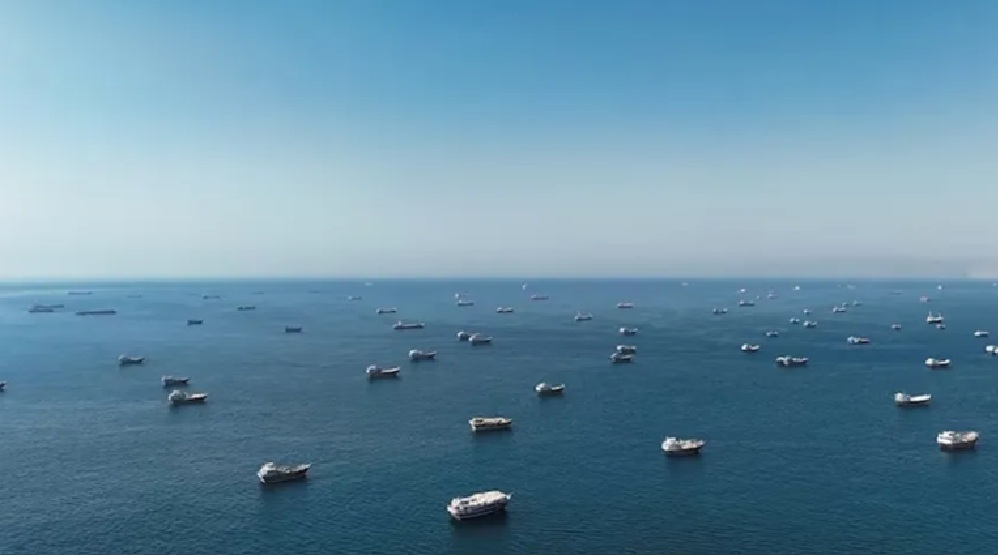
Vessel crossings through the Strait of Hormuz rebounded sharply after the lifting of the blockade, but recovery in one of the world’s key energy chokepoints remains fragile, according to MarineTraffic data.
MarineTraffic said on the US social media firm X on Monday that it recorded 71 confirmed transits through the Strait of Hormuz between June 19 and 21, with crossings peaking at 35 on June 20.
The pickup follows renewed signals around free passage through the waterway. More vessels are also transiting with their Automatic Identification System, or AIS, active, pointing to a gradual improvement in operator confidence.
Still, traffic has not fully normalized. MarineTraffic said activity remains below pre-crisis levels, while many ships continue to use Iranian route patterns or so-called dark routes, in which vessels limit or switch off AIS visibility, amid security concerns.
The Strait of Hormuz is central to global energy trade. Oil flows through the waterway averaged 20 million barrels per day in 2024, equal to about 20% of global petroleum liquids consumption, according to the US Energy Information Administration and the International Energy Agency.
The latest rise in crossings comes after a sharp disruption in Gulf shipping caused by the blockade and heightened regional tensions. Although easing restrictions allowed more vessels to resume passage, diplomatic uncertainty continues to weigh on shipowners, insurers, and charterers.
Demining efforts also remain incomplete, leaving operators wary of returning fully to normal route patterns.
The fragile rebound underscores the importance of sustained safe-passage guarantees for Gulf energy exports, as any renewed disruption would directly affect crude oil, refined products, and LNG flows, particularly to Asian importers.
Robban Assafina is now on WhatsApp channel. Click Here


