
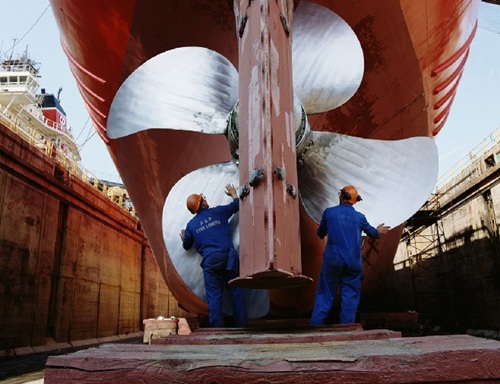
Shipbuilding is essential to a nation’s strength and economic resilience. How can the United States bolster its maritime talent pipeline to promote this critical sector?
With ships transporting more than 80 percent of the world’s traded goods by sea1, a thriving maritime industry is essential to fostering economic growth and shoring up national security. Yet for decades, the United States has grappled with significant shortages in maritime capacity. Shipyards, once the backbone of flourishing communities, now face myriad challenges—from talent gaps to outdated operating models that threaten their ability to grow and thrive.
The United States has gone from building 5.0 percent of the world’s ocean-going commercial ships in the 1970s to building about 0.2 percent today, as measured by gross tonnage. Simultaneously, the commercial shipbuilding industries in other countries, such as China, Japan, and South Korea, have grown significantly. For defense, which accounts for almost all US shipbuilding, the country is significantly behind in producing the volume of ships and submarines that the Department of Defense requires.2 Currently, China makes more than three warships for every one manufactured in the United States.3
Strengthening the nation’s shipbuilding capabilities is vital to meet growing domestic and international demand over the next 30 years, which will increase significantly, even by conservative estimates. But the maritime ecosystem faces critical talent gaps that are likely to intensify and hamper the sector’s growth if left unaddressed. The US government has acknowledged these gaps and committed to strengthening the maritime labor force, partly by re-assessing current nautical education programs and investigating the creation of new maritime academies.
Such efforts will likely improve the talent pool, but shipyard leaders, maritime industry organizations, and educational institutions must also devise more transformative strategies for building the future maritime workforce. While some recent initiatives have promoted private investment in the production of vessels and might attract workers to shipbuilding, they are not focused on broadly strengthening the talent pipeline.
Based on our analysis, shipbuilding stakeholders must focus on five critical actions as they try to improve the maritime talent pool: strengthening the value proposition for shipbuilding careers, bolstering the talent pipeline from educational institutions to shipyards, encouraging better skill building through educational partnerships, modernizing talent management, and sustaining success by improving ROI for all stakeholders.
The shipyard dilemma
According to the US Department of Labor, the shipbuilding industry may require about 200,000 to 250,000 additional maritime workers in critical occupations, such as welding, soldering, and front-line management, to satisfy demand over the next decade. If demand for ships increases, the labor gap will be even wider (Exhibit 1).


