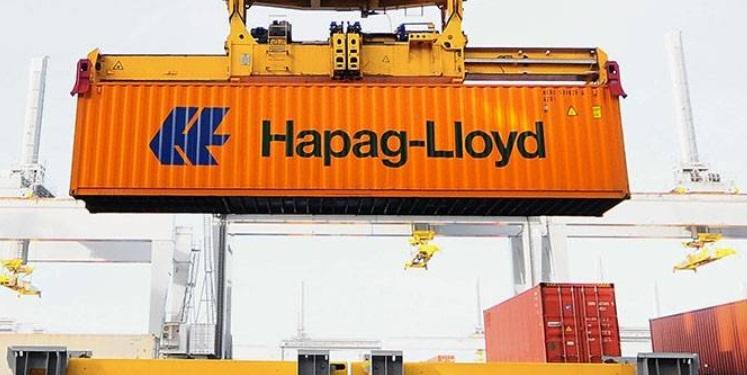
Hapag-Lloyd, a leading container shipping company based in Germany, is making waves in the maritime industry by ordering up to thirty new liquefied natural gas (LNG) dual-fuel container vessels in China. This marks an exciting phase in their fleet expansion after a period of inactivity in newbuilding orders.
The company has placed a firm order for ten 17,000 TEU vessels, with an option for five more, at Yangzijiang Shipbuilding. Each of these cutting-edge ships will come with a price tag of $210 million and will be outfitted with LNG dual-fuel systems and an impressive reefer capacity of 1,600 units.
But that’s not all. Hapag-Lloyd has also partnered with New Times Shipbuilding to construct another ten firm and five optional 9,200 TEU boxships, priced at $140 million each.
Ranked as the fifth-largest container shipping carrier in the world, according to Alphaliner’s TOP 100 list, Hapag-Lloyd welcomed several new LNG-powered ultra-large container vessels (ULCVs) earlier this year. These eco-friendly giants are not just a step toward a greener future; they are the largest boxships to ever sail under the German flag, featuring advanced LNG dual-fuel engines and energy-efficient designs.
The new ships will play a crucial role in Hapag-Lloyd’s ambitious goal to operate its entire fleet in a climate-neutral manner by 2045. As part of this commitment, the company is also looking beyond LNG, preparing for a multi-fuel future that includes exploring options like methanol and potentially ammonia. In the coming years, Hapag-Lloyd plans to implement alternative fuel retrofits, order new vessels, and enhance its fleet with energy-efficient solutions.
Earlier this year, Hapag-Lloyd entered into a partnership with Hong Kong-based Seaspan Corporation to retrofit five 10,100 TEU vessels powered by traditional S90 engines, converting them to dual-fuel engines that can run on methanol. Once the engine upgrades are complete, these vessels will remain on long-term charter from Seaspan to Hapag-Lloyd, continuing their vital role in the company’s operations.
Source: Global Flow Control