Class approval of autonomy software marks a step forward for shipowners weighing how and when to introduce self navigating capability. The decision signals growing clarity for fleet managers navigating safety, governance and future operations.
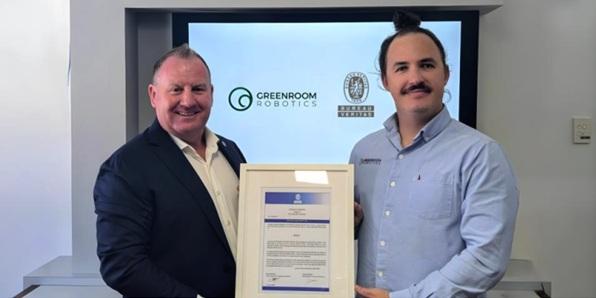
Shipowners exploring autonomous and remotely operated vessels have gained a new reference point after Bureau Veritas granted Approval in Principle to maritime autonomy software developed by Greenroom Robotics.
The approval covers Greenroom’s GAMA software, an AI driven system designed to enable self navigation by integrating data from multiple onboard sensors. For operators, the relevance lies less in pure technology and more in assurance. The assessment confirms that, at design level and within a defined scope, the software aligns with Bureau Veritas rules for autonomous and remotely operated vessels.
For shipowners and managers considering autonomy for newbuilds or retrofits, this reduces uncertainty around class expectations and flag state engagement. GAMA is designed to operate onboard or from a remote control centre and uses a modular architecture intended to allow existing vessels to be converted rather than replaced. That flexibility is central for commercial fleets balancing investment risk with long term digital strategy.
The assessment was carried out in line with Bureau Veritas NI641 guidelines for autonomous shipping. It provides an early stage appraisal of the system’s technical approach and offers a clearer route towards full certification. For defence and commercial operators alike, this is intended to lower integration risk and shorten approval timelines.
Harry Hubbert, Chief Operating Officer, Greenroom Robotics, said: “For shipbuilders and operators, this AiP accelerates the path to autonomy by validating GAMA’s design intent against class expectations. As one of the first maritime autonomy software to be granted AiP by Bureau Veritas, we’re proud to be leading the adoption of autonomy through proven and validated solutions.”
From the classification perspective, the emphasis remains on structured development. Alex Gregg-Smith, President, Marine and Offshore, Bureau Veritas, said: “Maritime autonomy represents a significant development for the industry, requiring both innovation and strong confidence in safety and governance. This Approval in Principle reflects Bureau Veritas’ role in supporting the structured development of autonomous technologies while helping industry stakeholders navigate emerging regulatory and technical expectations.”
For shipowners, the decision underlines how autonomy is moving from concept to managed option within mainstream fleet planning.