
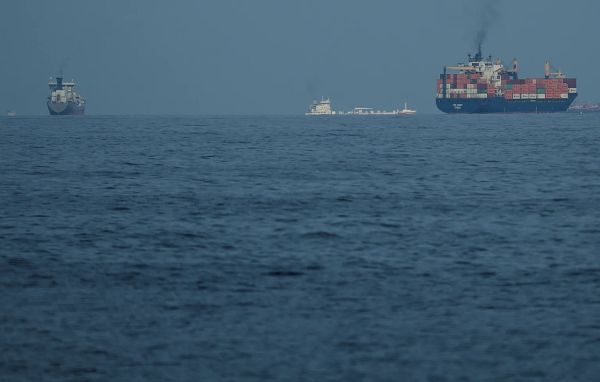
The Gulf Cooperation Council (GCC) countries are seeking to reshape the regional supply map by activating alternative ports, green corridors, and safe transport routes to reduce dependence on the Strait of Hormuz in light of Iranian escalation.
At a highly sensitive regional moment, the Gulf Cooperation Council (GCC) countries are moving proactively to protect their trade arteries, after the Iranian military escalation put direct pressure on supply chains and shipping, especially in the vicinity of the Strait of Hormuz.
In this context, the extraordinary meeting of the Ministers of Transport and Communications of the GCC countries gained great importance to discuss the effects of the current situation on trade, the readiness of border crossings, and mechanisms for addressing operational challenges to ensure the continued flow of strategic goods and the uninterrupted operation of markets .
green corridors
In a practical translation of what the meeting concluded, the activation of the “green corridors” protocol emerged as a key executive tool, through fast routes for the passage of food, medicine, fuel and vital goods with simplified customs and border procedures, to reduce clearance time and alleviate pressure on supply chains .
The recommendations also included promoting the use of alternative ports and safe transport routes, and developing coordination mechanisms to monitor and address any bottlenecks, according to the Secretary-General of the Gulf Cooperation Council, Jassim Mohammed Al-Budaiwi .
Supply map and operational alternatives
With the escalating risks around the Strait of Hormuz, the green corridors have gone beyond being a regulatory measure to become part of a broader logistical network that redistributes the supply map through alternative ports, linking them to land routes that ensure the continuation of trade flows even in the worst maritime disruption scenarios .
Despite the strategic importance of the Strait of Hormuz, the Gulf states have developed operational alternatives that reduce dependence on it, most notably the Saudi “East-West” pipeline (Petroline) to transport oil from Abqaiq to Yanbu with a capacity of 5 million barrels per day. In the UAE, the “Habshan-Fujairah” pipeline represents a pillar of energy security with a capacity ranging between 1.5 and 1.8 million barrels per day, while Bab al-Mandab remains part of the regional and international circumvention network, with estimated flows ranging between 6 and 9 million barrels per day through alternative pipelines, in addition to the Egyptian Suez Canal .
vital initiatives and ports
In order to further develop alternatives that enhance the resilience of supply chains, the GCC countries have begun launching practical initiatives to support their ports and logistics outlets. Saudi Arabia has launched several initiatives, including extending the operational life of trucks, allowing refrigerated trucks from GCC countries to enter empty to transport goods, establishing storage and redistribution zones in King Abdulaziz Port with a 60-day exemption from storage fees, and providing operational corridors for containers from the eastern ports to Jeddah Islamic Port .
In addition to launching an international logistics corridor linking the eastern region to the Al-Haditha border crossing in the north towards Jordan, and another logistics corridor between Sharjah in the UAE In the Kingdom .
These moves are doubly important, as the capacity of the Kingdom’s ports on the Red Sea coast exceeds 18.2 million containers annually, enabling Jeddah’s ports – Islamic, King Abdullah, Yanbu Commercial, King Fahd Industrial, and Jazan – to receive shipments from Asia, Africa, and Europe without passing through the Strait of Hormuz, and to connect them by land to the Gulf markets .
In the UAE, safe maritime and logistical alternatives are being implemented, with the ports of the UAE’s east coast becoming primary gateways for shipments before they are redirected to major logistical centers. The port of Khor Fakkan stands out for transporting containers by land to Jebel Ali and Khalifa Port, while the port of Fujairah represents a strategic pillar for energy security via the Habshan-Fujairah pipeline, which transports oil from Abu Dhabi to the east coast with a capacity of approximately 1.5 million barrels per day .
As for the Sultanate of Oman, it stands out as a relatively safe maritime hub, with the port of Salalah for land bridge routes towards the Emirates and Saudi Arabia, Sohar for re-pumping shipments to the Gulf market, and Duqm to accommodate the surplus of containers and increase the flexibility of supply chains when Salalah or Sohar are under pressure .
Strategic alternatives
In this context, Wadah Al-Taha, an expert, economic analyst, and member of the National Advisory Council of the CISI Institute in the UAE, told Al-Nahar that thinking about a unified logistics strategy for the GCC countries is extremely important in light of the complications imposed by Iran on safe passage outside the scope of the United Nations agreements .
He points to the importance of having strategic alternatives, whether Saudi ports overlooking the Red Sea or ports overlooking the Arabian Sea such as the port of Fujairah and the port of Khor Fakkan in the Emirates, and the ports of the Sultanate of Oman, expecting that these ports and land routes will form a vital alternative network to ensure the continuity of supply chains, in the event of worsening conditions and to enhance the ability of the GCC countries to overcome the current negative repercussions in light of the efficiency of the ports and alternative routes and the agreements between the GCC countries .
Robban Assafina is now on WhatsApp channel. Click Here
Source: Annahar


